Sunday, July 31, 2016

Teaching Words with Multiple Meanings

{Affiliate links used.}

As students of a language get more experience with its vocabulary, they can then branch out into learning multiple meanings of words. Homographs are words that are spelled the same way but have more than one meaning. For example, "perezoso" means "lazy", but it is also the word for "sloth". "Sierra" is both a mountain range and a saw. This fall I will be doing the following activities with my high school students to increase their vocabulary. Below you will several free printables I have created: flashcards that can be used in games and several worksheets. Many of these activities can be used with younger students as well.

I created these flashcards so that I could teach my students the words and double meanings. These cards could also be used to play Memory or Go Fish. I am also planning on using them for what I call the "Slapping Game" (more on that later in the post).

Set 1
Set 2
Set 3
Set 4
Set 5
Set 6
Set 7
Set 8
Set 9
Set 10

Here are three worksheets you can use. The first one is just fill in the blank. The other two are definitions in Spanish where the student has to provide the word for.

Worksheet 1
Worksheet 2
Worksheet 3

With the definitions I plan on playing the "Slapping Game" with my students. You need a set of cards for each group of students (Groups of five work well.). Have the students lay out the cards in front of them. You call out a definition for one of the cards (You can use the definitions in the worksheets). The first student to put their hand on the correct card gets to keep the card. The object of the game is to get more cards than your opponents.


Thursday, July 28, 2016

Mixing Art with Learning Spanish

{Affiliate links used.}

Last year I was able to do artist's studies with some of my more advanced students. I would show them a work of art from Latin America or Spain and then ask them questions in Spanish. We would speak in the target language about the painting's colors and objects. We would talk about what was happening in the picture and even what my students would ask the artist about the painting if they had a chance. If you would like to see how I did these picture studies, go to this post which also contains a free printable of all the questions in Spanish you can use for any work of art. 

This year as I get ready for classes I was pondering how I could do a similar activity with students who may not have as much Spanish under their belts or who are younger and can't take some of the "darker" or bizarre pieces. Then I came across this book, Come Look with Me: Latin American Art. Each two-page spread has one piece of art on the left-hand side and then on the right there are a few questions (in English) about the work of art kids can answer and a description of the artist and his or her life (also in English). 


The book has the following artists in it with one piece of their work displayed:

José Posada (Mexico)
Joaquín Torres-García (Uruguay)
Ramón Frade (Puerto Rico)
Fernando Botero (Colombia)
Diego Isaias Hernandez Méndez (Guatemala)
Xul Solar (Argentina)
Diego Rivera and Frida Kahlo (Mexico)
Amelia Pelaez (Cuba)
Rufino Tamayo (Mexico)

...and a few more.

So how am I going to use this book? I am going to take my beginning or younger students and ask them the same set of questions for the paintings. Once they do well with these questions we can move onto more detailed ones. Here are the questions:

  • Nombra los colores.
  • Cuenta_______________ (any set of objects in the picture like animals, balloons, etc.)
  • ¿Dónde está la escena?
  • Nombra unas acciones en el cuadro.
  • ¿Cuál parte (no) te gusta de la obra?
  • Dáme dos palabras para describirla.
If you would like to use more examples of Hispanic art you can go searching on my Pinterest board of art for Spanish teachers by clicking here.

Also, there is a whole series of these books! You don't necessarily have to use Hispanic art to use Spanish to talk about the pictures (although it is an nice addition of culture to your lessons).


Monday, July 25, 2016

¿Dónde Está la Oveja Verde?


{Affiliate links used.}

Today let's take a look at ¿Dónde Está la Oveja Verde?, a cute book in search of a little green sheep. This book is great for younger kids that are bilingual or learning Spanish. With it you can teach and/or review colors, prepositions, and opposites. Let's take a look...

Since several of the colors are mentioned in the book, this would be a great time to teach colors. Here is a free pattern to use to make different colored sheep. This would be great to use in conjunction with prepositions in the book (abajo, arriba, lejos, cerca).  In Spanish, you can ask your students to position the sheep according to your instructions. For example, "Pongan la oveja roja cerca de la amarilla."

Another aspect of the book is to focus on opposite words. In the book there are the following opposites: flaca, gorda, abajo, arriba, asustada, valiente, cerca, lejos. I love this traditional song that works with opposites. I have done it with my students in the past and they have loved the challenge of it! You start out easy having them say the opposite of what you say by making the list of three words the same (blanco, blanco, blanco), but then make it more difficult by mixing up the words. Here is a video by Luis Pescetti demonstrating how it is done:


Here are the words to the song:

Yo conozco un juego / I know a game
que se juega así. / that you play like this.
Cuando yo digo blanco, / When I say white,
Uds. dicen negro. /you say black.
Cuando yo digo negro, / When I say black,
Uds. dicen blanco. /you say white.
Este juego va a empezar; / This game is going to start;
no se vayan a equivocar. / don’t make a mistake.
Blanco, blanco, blanco / White, white, white (leader)
Negro, negro, negro / Black, black, black (group)
Blanco, negro, blanco / White, black, white (leader)
Negro, blanco, negro / Black, white, black (group)


Another option is to do a drawing activity with sheep by describing the sheep using the vocabulary in the book. Here are some ideas of what you can say and have your students draw...

La oveja azul se baña.
La oveja flaca va hacia arriba.
La oveja anaranjada juega en las olas.
La oveja asustada está lejos.
La oveja blanca está en la luna.
La oveja negra va en coche.
Esta oveja toma el sol.
La oveja valiente va abajo.
La oveja morada baila bajo la lluvia.

La oveja verde está dormida.

Finally, I know you have heard of counting sheep so why not get your kids counting...even skip counting! Here is a link to some low-cost printables to do just that.

If you are looking for more learning activities to go along with Spanish children's book, check out this post. 


Monday, July 18, 2016

Froggy Se Viste


{Affiliate links used.}

Froggy Se Viste is one of the best books to use in a clothing unit in Spanish. I have used this book repeatedly over the years to introduce and review clothing vocabulary. Let's take a quick look at learning activities you can do with this story...

Although Froggy Se Viste is set during the winter, you can use the book to discuss the four seasons and different weather situations. This cute, printable "Dress-A-Frog" set would be useful as it contains clothes for each season and weather cards. You can have students pick a weather card. In Spanish, you can discuss what the weather is and the potential season. Then you can have the student dress the frog accordingly. After "Froggy" is dressed you can then have students tell you what he is wearing in Spanish. There is also this free set of Froggy with his mom.

Another possibility for this book is to go over body parts. For example, call out an article of clothing that Froggy wears and have your students tell you what body part that piece of clothing is used on. To extend this activity, you can use Mr. Potato Head. See this post on how I use this toy to teach/review body parts and clothes in Spanish. See below for different sets of Mr. Potato Head that have clothing for winter and summer. If you work with Mr. Potato Head you can incorporate reflexive verbs into the activity. You can talk about Froggy using the verbs: vestirse, quitarse, ponerse, mirarse. You can also use those verbs to ask your students questions about what they put on in the morning or in the winter, etc.

With this book, you can add in some science by studying the life cycle of frogs. There are two units on Teachers Pay Teachers that I have used to teach the life cycle and parts of a frog.


Have fun with Froggy!


Monday, July 11, 2016

Abuelita Fue al Mercado


{Affiliate links used.}

If you are looking for more book activities in Spanish, see this post!

Let's take a trip around the world today in Spanish! Abuelita Fue al Mercado is a rhyming book about a grandma who travels the world shopping for items related to each country she visits. This book offers up some great learning opportunities in geography, numbers, and working with sizes. Let's take a look...

Because the abuelita goes to a country on every continent (except Antarctica), this book would be the time to introduce the continents and familiarize kids with the countries that are visited (Turkey, Thailand, Mexico, China, Switzerland, Kenya, Russia, Australia, Japan, and Peru). I love this World Foam Map Puzzle even though it is in English. As my young students are putting the map together I point out in Spanish the continents and the countries. Another activity I do with them is to call out a place and have them put their finger on it. I also teach my students the four points of a compass (north, south, east, and west). I then in Spanish tell them to go from (for example) Russia to Peru with their fingers. They then have to tell me what major direction they went in. If you want a children's atlas in Spanish, this one is my favorite! You can read more about it here.  Another learning option is to write or have pictures of the items bought on index cards. Can your students remember where the items came from and tell you in Spanish? Can they find the correct country on the map?

Abuelita Fue al Mercado is a counting book as she buys one item in one country and then two in the next and so on and so forth. You could also do simple addition with the book. For example, abuelita bought six drums in Kenya and four lanterns in China. Have your students add those numbers in Spanish. Can they add up ALL the items to see how much grandma bought?

I try to  incorporate a listening activity with drawing activity whenever I can. For this book, you can call out a number and and item from the book and see if your students can draw it. The number and item don't have to match what is in the book. You can say, "cinco gatos" for example instead of the two that are in the story.

Spanish Playground has a great activity that involves working with vocabulary related to sizes and Matryoshka dolls. These dolls are featured in the book so head on over to Spanish Playground and take a look at this great activity in Spanish!

And finally, below you will find resources for the book including some other "go-along" books you can read to your kids. For example, one of the items that abuelita buys are llamas so be sure to check out the Spanish books on them.


Monday, June 27, 2016

Se Venden Gorras

{Affiliate links used.}

Se Venden Gorras is a classic book that you can use to reinforce colors, actions, and prepositions in Spanish. Let's take a quick look at what you can do with this book when teaching Spanish...

A fun activity to do with this book is TPR (Total Physical Response). There are several actions within the story that you can ask your students to perform through giving commands in Spanish. Here is a list of the actions you can use...

Dormirse, despertarse, tocarse la cabeza, buscar a la derecha (a la izquierda), buscar a espaldas, levantar la vista, señalar con el dedo, apretar los puños, dar puntapiés, quitarse la gorra, tirarla al suelo, arrodillarse

With these actions, you can also play Simon says.


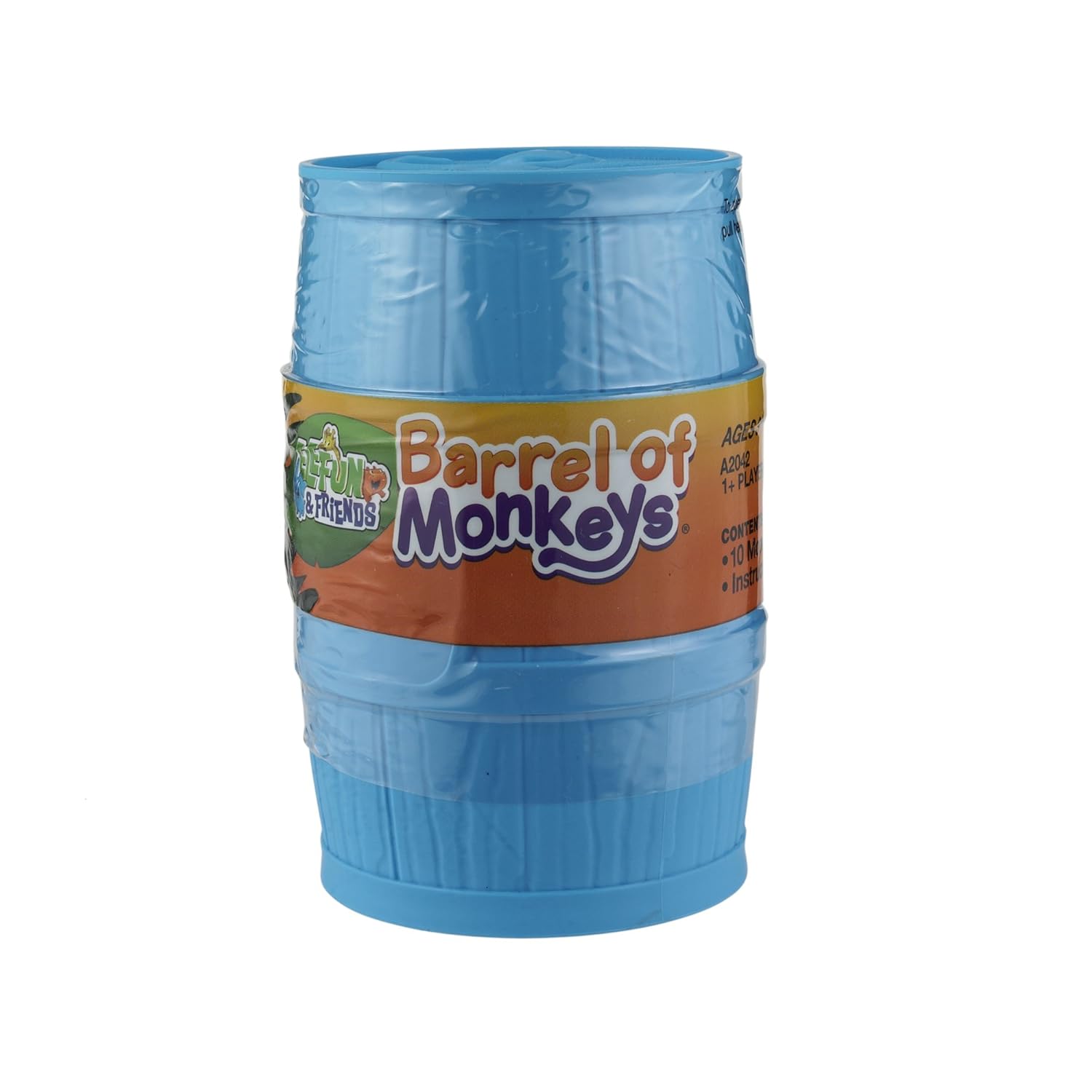
Remember the old game, Barrel of Monkeys? This would be a great time to play that game and practice counting in Spanish. 

This is a great printable you can do with your students. Give them instructions in Spanish on how many blue caps, red caps, etc. they need. Then also tell them in Spanish the order of the caps (you can make up a new order that's different from the book) that go on the peddler's head. Here are some more printables that are similar in which you can do a sequencing activity in Spanish.

Here are some free printables for the book. Yes, they are in English, but be creative and think of ways you could use them in Spanish. 

Here's such a cool idea...have your students recreate the story with actual manipulatives! This idea comes from Magical Movement Company. You can find it here.

CLICK HERE for more book activities.


Monday, June 20, 2016

De la Cabeza a Los Pies

{Affiliate links used.}

Animals and movement. What could be better for young children? I adore many of Eric Carle's books and have used them over the years in teaching Spanish. De la Cabeza a los Pies offers a wonderful opportunity to get kids moving and learning.

As far as vocabulary goes there are animal names to learn and body parts. Each page of the book features an animal like a penguin, seal or camel doing a certain action. The text is simple and somewhat repetitive to help kids absorb the language better. Here is a look at some learning activities you can do with this book:

Play Simon says in Spanish. Since there are a plethora of actions in the book you can use them to play this simple childhood game. Here is a list of possibilities...

Girar la cabeza, doblar el cuello, alzar los hombros, saludar con los brazos, aplaudir con las manos, golpearse el pecho, arquear la espalda, menear las caderas, doblar las rodillas, dar patadas, pisar muy fuerte, mover el dedo del pie

Another option with these actions is to call out the animal in Spanish and see if your students can do the action the animal did in the book. This requires a bit of memory so it might be a better activity after you have read the book a couple times to them. Along the same lines, you can call out a body part and see if they can point to it on themselves. 

Another activity I like to do along with this book is to use songs related to body parts. Diez Deditos is filled with wonderful songs and rhymes in Spanish for kids. It contains two to three songs that would be a great go-along for De la Cabeza a los Pies. Here is the song book for the CD which is incredibly helpful because not only do you get the words, but there are suggested actions for the songs.

Check comprehension by saying a sentence outloud about one of the animals...for example, "El mono saluda con los brazos." or "El cocodrilo gira la cabeza." If the statement is correct, then the students say, “Claro que sí” (a repeated line from the book). If the statement isn't correct, they say, "Claro que no".

If you are looking for graphics to go along with the book to make cards with, here is a link from Teach Beside Me. These are in English, but you could cut that part out or leave it. If you make cards, you can then have students select a card and say what the animal and action is in Spanish and then have them act it out.