Showing posts with label Animals. Show all posts

Wednesday, October 3, 2018

Culture, Crafts, and Language Learning


{Affiliate Links Used}

It's been SEVERAL months since I posted. Life has been much busier than I ever imagined. This past summer I did Spanish camps and loved teaching more kids the language and introducing them to the cultures where Spanish is spoken. At some point, I hope to do some posts on those adventures and share my teaching ideas.

This fall I decided to offer a new type of class... ¡Explora Español!, a six-week class that gives kids a taste of Spanish through culture and crafts. I have really enjoyed this class more than I would have imagined. With each week, I teach a bit of Spanish and then connect it to a cultural component which leads into a craft. Let's take a look at one of the classes I did to see how it all works together...

One week I taught the kids body parts. Since I tend to use Mr. Potato Head in my regular classes when teaching body parts I figured I would do the same in my exploratory class also. Then it hit me. Potatoes are originally from South America. There was a tie-in. So after teaching body parts, we talked about the potato and where it came from. I mentioned the many varieties out there...many more than my students had ever seen. We then reviewed the body parts using Mr. Potato Head. I then gave each student a potato and we got to work. This craft was done mostly in Spanish. We started with the "ojos" and did the complete face. The sombrero and zapatos were next. We finished by placing cut pipe cleaners on the sides for brazos. 


The paper parts I cut out ahead of time to save time. {Also, it is a good idea to wash and dry the potatoes ahead of time so the glue will stick.} You can find several templates online like here. Make sure to resize them so they will fit on the potatoes you are using.  We would review the name of the body part in Spanish and then students would put glue {We used this one, and it works well.} on the piece. Because the potatoes are round it helped to hold the pieces in place for a few seconds. I had the students count to twenty in Spanish before taking their fingers off one of the pieces. With the shoes, it was helpful to use these glue dots instead of the liquid glue. Aren't they so cute?

Here are some other ideas for connecting language, culture, and crafts into your lessons {You can click on the link for each craft to get ideas}:

Names of animals-- Talk about the importance of llamas in South America-- Paint a llama 
Clothing vocabulary-- Talk about Guatemala and worry dolls-- Make a worry doll


House Vocabulary-- Talk about the neighborhood of La Boca, Buenos Aires, Argentina-- Make "La Boca Houses"
Weather Vocabulary-- Talk about the Atacama Desert in Chile-- Make a Chilean rainstick
Fruit and Veggie vocabulary-- Talk about Chile and Peru and arpilleras-- Make an arpillera
Telling time-- Talk about the artist Salvador Dalí-- Make melting clocks

Do you have any other connections for teaching language, culture and then adding a craft? I would love to hear them!!

Thursday, June 22, 2017

Spanish Camp for Kids {Day 4}

{Affiliate Links Used}

I had the privilege of living in Buenos Aires, Argentina for awhile to improve my Spanish. One of the interesting places I visited was the neighborhood of La Boca with its brightly painted houses. So for the fourth day of my Spanish camp we are going to focus on houses and the vocabulary surrounding them (door, window, up, down, outside, inside) and then recreate some of the typical houses in La Boca.


Today I have decided to rely heavily on die cuts. I made six houses each in a different color. I also made die cuts of different weather symbols. So to review weather, house, and color vocabulary I will give students instructions in Spanish and see if they can create the scene I describe. For example...

Llueve sobre la casa roja.
Nieva sobre la casa verde.


I am also going to take this opportunity to review animals with the die cut houses. I found some animals that were smaller than the houses. I will lay out all the different colored houses and then hide one of the animals underneath one of the houses. Students will need to ask me in the target language if the animal is behind the blue house or the yellow house, etc. 


Another activity we will do is to draw in the details of houses following my instructions in Spanish. See this post for more information. And this post for the printable of houses you can use.

One of our active games today will be using the colored cups I bought for the week. With them we will play "Arriba/Abajo". Take several cups (maybe twice as many cups as you have students) and place half of them right side up (arriba) and half of them upside down (abajo) on the lawn or large play area. Divide your group into two teams one that is "arriba" and one that is "abajo". Tell them to start...the object of the game is to change the cups to fit what team you are on. If you are on the "arriba" team then you need to run around putting all the cups right side up. If you are on the "abajo" team then you want them all upside down. Give them one minute to play. The team with the most cups in their position wins.

Our craft will be to re-create the houses of La Boca, Argentina. Here are the instructions for the project with a little background information on La Boca. 


You will need a paper crimper for this project to give the right look to the sides of the buildings. Here is a link to get an idea of what to look for...


For our reading today we will dive into the following books:


Harold y el Lapiz Color Morado
Ruidos en la Casa- Cute book of a puppy who is scared being home alone
La Casa Adormecida
El Pastel Esta Tan Arriba
Oso en Casa

To see the rest of my plans for the other days of camp, click HERE!!


Wednesday, June 21, 2017

Spanish Camp for Kids {Day 3}


{Affiliate Links Used}

If you have been following along, you know that I am hosting Spanish camps this summer. You can read about the other days by clicking this link. For day three, we will be focusing on animals. Here's a look at our activities...

I selected a list of about ten animals to focus on for the day and made flashcards in order to teach the vocabulary. You can find some great animal flashcards in Spanish HERE.

We will do several games today like Color, Colorcito. Here are the instructions.

We will do an animal hunt game. I have several die cuts of animals that I have laminated that I can hide in the lawn. I will call out an animal and the students will race to find it. Whoever does can then call out an animal. Just a simple way to review the vocabulary.

I made an Animal Tally Game by taking scrapbook paper of animal skins or pictures (see below) and punching out squares. Each student will receive a page (I made about five different pages so that not every single one is the same combinations of animals, but it is still the same number of animals to find.) Then I have a set of cards with the same scrapbook paper punched out, backed with cardstock and laminated. These will be laid face down. Students take turns picking up a card and telling us in the target language the name of the animal represented. If they need that animal they place it over the square on their sheet. If not, they return it to the pile. The first student to get all the cards on his or her sheet wins.


For our craft for the day, we will be making paper molas (See the top photo in the post). Molas come from the Kuna tribe in Panama. They are normally made out of cloth and worn by the women.  Here are some examples. And here are the instructions for making paper molas.

And finally, here are the books I will be sharing with the students:


Yo Tenia un Hipopotamo
De La Cabeza a Los Pies
Sali de Paseo- A good way to review colors also.


Monday, July 18, 2016

Froggy Se Viste


{Affiliate links used.}

Froggy Se Viste is one of the best books to use in a clothing unit in Spanish. I have used this book repeatedly over the years to introduce and review clothing vocabulary. Let's take a quick look at learning activities you can do with this story...

Although Froggy Se Viste is set during the winter, you can use the book to discuss the four seasons and different weather situations. This cute, printable "Dress-A-Frog" set would be useful as it contains clothes for each season and weather cards. You can have students pick a weather card. In Spanish, you can discuss what the weather is and the potential season. Then you can have the student dress the frog accordingly. After "Froggy" is dressed you can then have students tell you what he is wearing in Spanish. There is also this free set of Froggy with his mom.

Another possibility for this book is to go over body parts. For example, call out an article of clothing that Froggy wears and have your students tell you what body part that piece of clothing is used on. To extend this activity, you can use Mr. Potato Head. See this post on how I use this toy to teach/review body parts and clothes in Spanish. See below for different sets of Mr. Potato Head that have clothing for winter and summer. If you work with Mr. Potato Head you can incorporate reflexive verbs into the activity. You can talk about Froggy using the verbs: vestirse, quitarse, ponerse, mirarse. You can also use those verbs to ask your students questions about what they put on in the morning or in the winter, etc.

With this book, you can add in some science by studying the life cycle of frogs. There are two units on Teachers Pay Teachers that I have used to teach the life cycle and parts of a frog.


Have fun with Froggy!


Monday, June 27, 2016

Se Venden Gorras

{Affiliate links used.}

Se Venden Gorras is a classic book that you can use to reinforce colors, actions, and prepositions in Spanish. Let's take a quick look at what you can do with this book when teaching Spanish...

A fun activity to do with this book is TPR (Total Physical Response). There are several actions within the story that you can ask your students to perform through giving commands in Spanish. Here is a list of the actions you can use...

Dormirse, despertarse, tocarse la cabeza, buscar a la derecha (a la izquierda), buscar a espaldas, levantar la vista, señalar con el dedo, apretar los puños, dar puntapiés, quitarse la gorra, tirarla al suelo, arrodillarse

With these actions, you can also play Simon says.


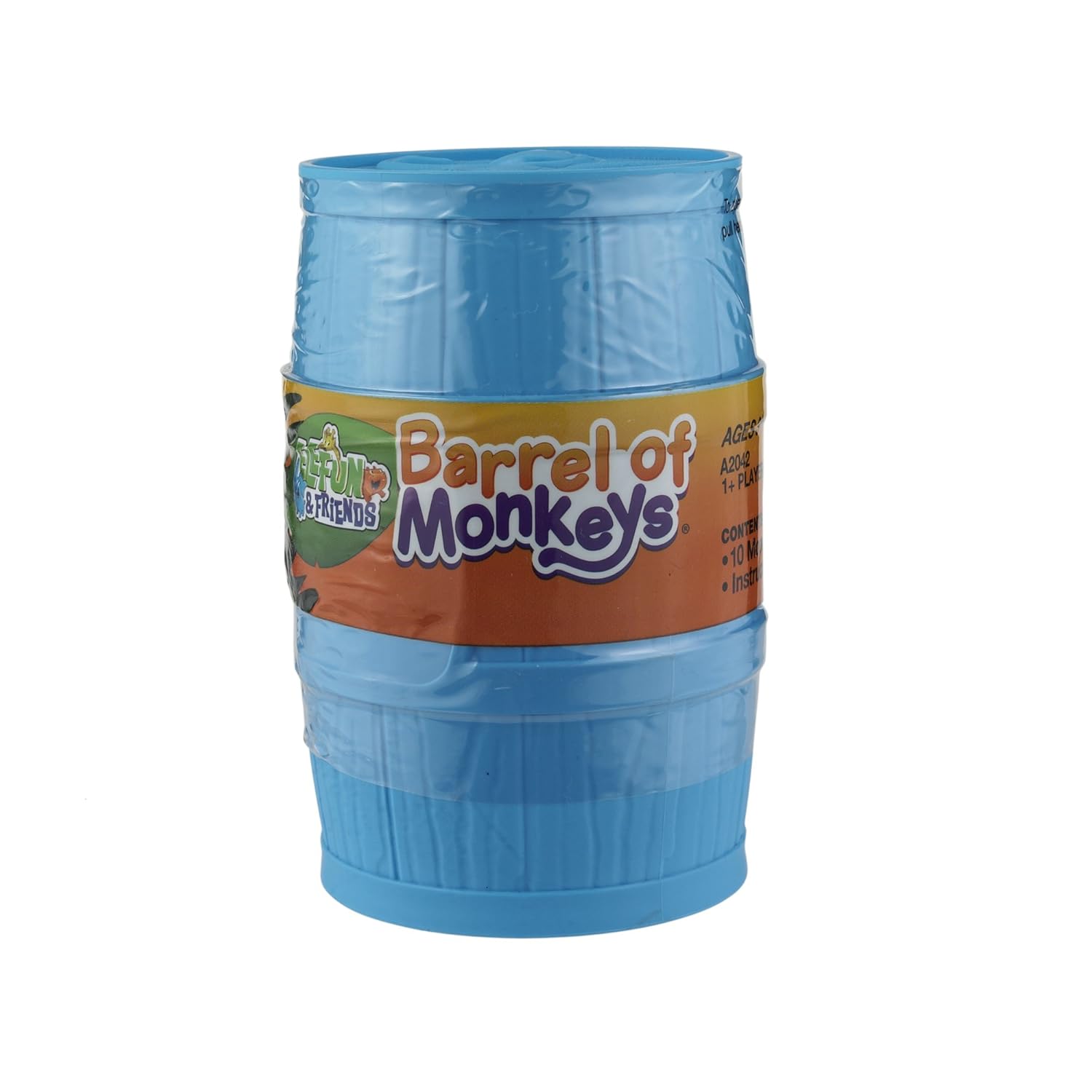
Remember the old game, Barrel of Monkeys? This would be a great time to play that game and practice counting in Spanish. 

This is a great printable you can do with your students. Give them instructions in Spanish on how many blue caps, red caps, etc. they need. Then also tell them in Spanish the order of the caps (you can make up a new order that's different from the book) that go on the peddler's head. Here are some more printables that are similar in which you can do a sequencing activity in Spanish.

Here are some free printables for the book. Yes, they are in English, but be creative and think of ways you could use them in Spanish. 

Here's such a cool idea...have your students recreate the story with actual manipulatives! This idea comes from Magical Movement Company. You can find it here.

CLICK HERE for more book activities.


Monday, June 20, 2016

De la Cabeza a Los Pies

{Affiliate links used.}

Animals and movement. What could be better for young children? I adore many of Eric Carle's books and have used them over the years in teaching Spanish. De la Cabeza a los Pies offers a wonderful opportunity to get kids moving and learning.

As far as vocabulary goes there are animal names to learn and body parts. Each page of the book features an animal like a penguin, seal or camel doing a certain action. The text is simple and somewhat repetitive to help kids absorb the language better. Here is a look at some learning activities you can do with this book:

Play Simon says in Spanish. Since there are a plethora of actions in the book you can use them to play this simple childhood game. Here is a list of possibilities...

Girar la cabeza, doblar el cuello, alzar los hombros, saludar con los brazos, aplaudir con las manos, golpearse el pecho, arquear la espalda, menear las caderas, doblar las rodillas, dar patadas, pisar muy fuerte, mover el dedo del pie

Another option with these actions is to call out the animal in Spanish and see if your students can do the action the animal did in the book. This requires a bit of memory so it might be a better activity after you have read the book a couple times to them. Along the same lines, you can call out a body part and see if they can point to it on themselves. 

Another activity I like to do along with this book is to use songs related to body parts. Diez Deditos is filled with wonderful songs and rhymes in Spanish for kids. It contains two to three songs that would be a great go-along for De la Cabeza a los Pies. Here is the song book for the CD which is incredibly helpful because not only do you get the words, but there are suggested actions for the songs.

Check comprehension by saying a sentence outloud about one of the animals...for example, "El mono saluda con los brazos." or "El cocodrilo gira la cabeza." If the statement is correct, then the students say, “Claro que sí” (a repeated line from the book). If the statement isn't correct, they say, "Claro que no".

If you are looking for graphics to go along with the book to make cards with, here is a link from Teach Beside Me. These are in English, but you could cut that part out or leave it. If you make cards, you can then have students select a card and say what the animal and action is in Spanish and then have them act it out.


Monday, June 13, 2016

El Nabo Gigante {Book Activities}

{Affiliate Links Used.}

Whenever I can use a story or a children's book to help my students learn it is so much more enjoyable. There is something about a story that sucks kids in and once you have their attention you can teach them more than through straight memorization or lecture. Let's take a look at a great book about a farming couple who grow a giant turnip. How will they ever be able to get the huge veggie out of the ground? El Nabo Gigante is a delightful tale of problem-solving and a group of farm animals.

First of all, there is a plethora of vocabulary to teach your students...lists of animals and veggies. Some of the colors are touched on in the story which can be a springboard for reviewing the colors with beginners. Also, three of the four seasons are mentioned which means you can review and/or teach those words.

Another opportunity with this book is to teach the parts of plants. Please see my post on the plant unit I use with my students.

Another great aspect of this book is that there are tons of words with the letters c and g. I take time to focus on these two sounds with my students that are learning to read Spanish. You can do this one of two ways...First, of all I create cards with some of the words from the book. {See the list below if you would like to make your own cards.}

Then I either teach my students the phonetic rules for c and g or I read off the cards and see if they can come up with the rules. In case you need a refresher, here are the rules.


  • The letter "c" makes the "s" sound when it is followed by "e" or "i". It makes the "k" sound when it is followed by "a", "o", or "u".
  • The letter "g" make an "h" sound when followed by "e" or "i". It makes the hard "g" sound (like in the word "gorilla") when followed by the other vowels.

Here is a list of words from the book you can put on cards for your students to practice reading:

"C" words: cama, crecer, arrancar, cintura, campesino, torcida, canarios, cocina, encima, cinco, ratoncito, cuello, cerditos, vaca, cabeza

"G" words: jugosa, gansos, agujero, gigante, gallinas, gatos, guisantes

Here is a drawing activity: At the beginning of the story you will notice that there are several animals that are described. For example: seis canarios amarillos, cinco gansos blancos, cuatro gallinas pintas, tres gatos negros, dos cerditos barrigudos, and una enorme vaca

Using this vocabulary, give your students instructions on what to draw, but mix up the vocabulary. So for example, say "tres cerditos amarillos" or "cinco vacas pintas" and see if they can draw them correctly.

You can also work with ordinal numbers with this story. On this page (just below) you can discuss in Spanish who is first, second, and so on.


Here is a great story sequencing activity (you would just need to write the cards in Spanish instead.) to go along with ordinal numbers.

And finally, you can always do a cooking project after reading this book. Make a stew with the vegetables mentioned in the book!

If you would like to read about more book activities in Spanish, visit here.


Saturday, April 23, 2016

Silly Sentences in Spanish

{Affiliate links used.}

I love using flashcards to help kids review vocabulary, but let's face it, review with flashcards is rather boring. So when I can, I use flashcards as a basis for creating crazy sentences. Most of my flashcards are stored in categories. For example, all modes of transportation are together or all items in a house are in another pile. {NOTE: I make flashcards with the pictures from these books: Basic Vocabulary Builder and Practical Vocabulary Builder.}


I pick about three categories of vocabulary cards and lay the piles face down. For example, I could use professions, places in a city, and modes of transportation. A student picks up the top card of each pile and then says a sentence based on the three pictures. For example...

El mecánico va al cine en la moto.

The next student then turns over the next set of cards to create a new sentence. Many of the sentences will be "crazy"...like "The doctors go to the supermarket in a helicopter."

There are tons of card combinations you can use to create sentences. Here are just a few ideas with the cards you would use and an example sentence:

  • Subject pronouns~Verb~Place  {Yo bailo en el banco.}
  • Family Members~Food~Colors {La hermana come las fresas verdes.}
  • Household Items~Rooms in a House {La cama está en la sala.}
  • Clothing~Colors~Seasons  {Uso la camisa blanca en el verano.}
  • Animals~Preposition~Items in a House {El mono está a la derecha de la mesa.}

Don't want to make your own cards? Here are cards that would go well with this activity...


Photo Cards {Already separated into 16 categories}

Photo action cards


Noun Cards {Things Around the Home}


Tuesday, April 19, 2016

Toys for Language Learning


Affiliate Links used.

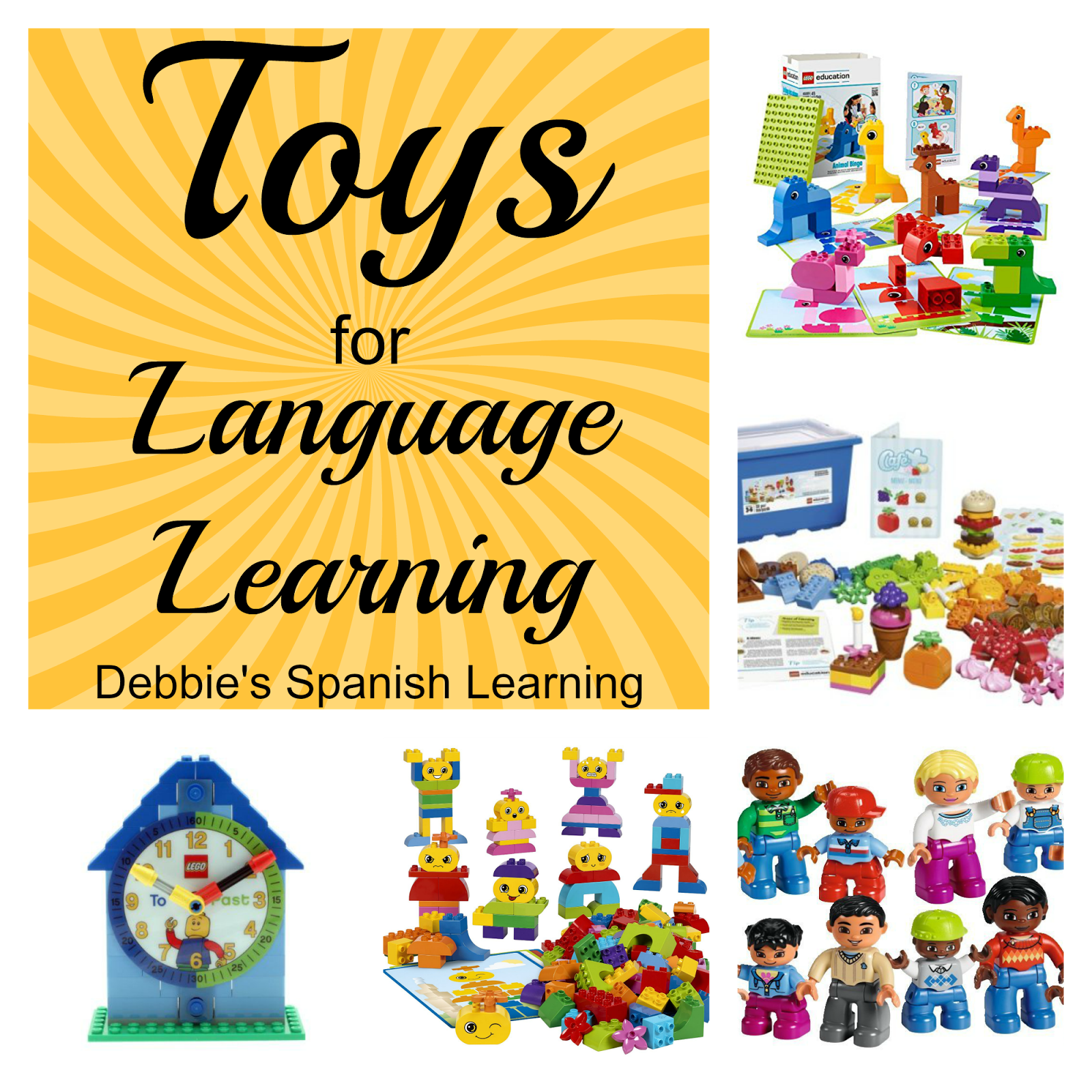
For young kids (and even some older ones), there is incredible value in having items that they can manipulate as they learn. My students eyes light up when I bring out any type of item that is toy-like to help them acquire Spanish. That's why this list of building sets could be incredibly valuable when you are teaching another language to kids.

These LEGO® sets would work really well if you are teaching young kids a foreign language...

The first one that caught my eye was the Build Me Emotions set. For years I have struggled to come up with ideas for teaching emotions so I am always on the lookout for new ideas. I see so much potential for this set like...

  • Telling students "Edifica triste" or "Edifica contento" then having kids build a character with that emotion.
  • Calling out an action in the target language and having them make a person with an appropriate emotion on its face. For example, the teacher says "Yo como el chocolate" and a happy person is built.
  • Describing a person (what they are wearing) and what they are doing then having kids make that person with the correct colored clothing and a facial expression for the action.


The Animal Bingo set is a like a bingo game in which kids pick a building card that allows them to create an animal as they collect the pieces for it. With this game, there is the opportunity to learn animal names, colors, and shapes.


The World People Set are great props for physical description of people and clothing. The vocabulary for family members would work well with these also. I would use this set by displaying all the figures and then describing in Spanish one of the people to see if my students can guess who I am talking about. Students can also describe the people in the target language. Another idea is to categorize the people into groups by calling out a characteristic like "pelo moreno" or "lleva azul" and have your students separate out those that fit into that category.


Community Minifigures - a great set for discussing occupations and descriptions of people.


Time Teacher with Constructible Clock- A clock that kids can build and that you can use with them to teach them to tell time!


Family and House Kit- Build this house and then there are opportunities to talk about the rooms of the house and what they contain. This set would be great to work with prepositions. Students could describe where things are located in the target language or the teacher could tell students where to put certain items.


This Food Set has a plethora of pieces so that kids can "build" different foods. This is definitely on my wish list as I know my younger students would adore it! There are opportunities to discuss the colors of the foods, learn new food words, and even do categories of foods (like fruits, veggies, meats, etc.)

LEGO®is a trademark of the LEGO Group of companies which does not sponsor, authorize or endorse this site.


Sunday, January 17, 2016

Activities with Children's Books

{Affiliate Links Used}

If you have read my blog for any amount of time you know that I LOVE children's literature. I use it every day with my elementary students when I teach. Throughout my website I have several posts on how to take a book, read it to your students, and then do learning activities related to the story. Here is a list of what is currently available.

La Oruga Hambrienta is the book I use with young kids to introduce the days of the week. Here is a free printable activity to do with the book.

Si Quieres Ver Una Ballena is a sweet book with a boy that gives advice on how to see a whale. I have read this book to my students and then done this drawing activity with them.

Pinta Ratones can be used to introduce simple color theory to kids.

Here is a more advanced book with another color mixing activity.

Here's a great book to review prepositions and food vocabulary. A simple drawing activity is included. 

Oliver Jeffers' book, Arriba y Abajo, has opportunities to teach new vocabulary.


This sweet book about taking the moon for a walk is a great way to review the names of animals.

La Casa Adormecida allows you to review prepositions with young kids.

Atrapados is another awesome book by Oliver Jeffers. At the end of this post is an activity to review the vocabulary introduced in the book.

Se Venden Gorras has several learning opportunities with colors, patterns, and sorting.

To review numbers 1-20, use Un Alce, Veinte Ratones


Tuesday, January 5, 2016

Using Stickers in Language Learning


{Affiliate links used.}

Kids love stickers! One of the ways I add variety to my teaching is to occasionally pull out my collection of stickers and use them in listening activities with my students. The basic idea is for each child to have the same set of stickers to use on a piece of paper with a picture or various pictures on it. I describe the sticker in the target language and where to put it on the page. I then see if my students can follow directions.

For the pages we use I love these books, Basic Vocabulary Builder and Practical Vocabulary Builder. They are blackline master with thematic pictures on each page. Here are some examples...


I have also used other types of pages like when we learn how to tell time in Spanish I use a sheet filled with pictures of clocks. I instruct my students to put a certain sticker on the time I tell them. A final idea on pages? You can use any scene with lots of items and actions in it. The more there is on the page the more the students have to listen carefully to your instructions and hunt for the correct picture to put their stickers on.

Here are sheets of stickers I have found useful. The goal is to use sheets that have enough items that are different from each other that you can describe to your students exactly which sticker to use.


Monsters Shape Stickers  are great because you can review colors, body parts, and even a few animal words (For example, one of the monsters has the nose of an elephant. Another looks like a snake.)

Penguin Stickers- Great for reviewing winter clothing like hats, scarves, skis, etc. See this post for another activity with these stickers.

Emoticons Stickers-Use these to review emotion vocabulary.

Snowmen Stickers -Once again for winter clothing.


Robot Stickers- Also great for reviewing body parts

Pirate Stickers- Lots of vocabulary here!

Kid Stickers-These are awesome for reviewing how to describe people.


Alphabet Stickers-I use these after teaching the alphabet.