Showing posts with label Numbers. Show all posts

Monday, January 29, 2018

Teaching Young Kids Spanish Numbers 11-20


{Affiliate links used.}


When it comes to counting in Spanish, once kids have 1-20 memorized the numbers up to 100 become easier. Most kids in the US already know 1-10 in Spanish or at least most of those numbers. Eleven through twenty tend to be more challenging. Last week I did a simple activity with some of my young students to get them counting and help them memorize their numbers. The key ingredient? STICKERS!

There is something motivating about stickers for kids. While there isn't much prep to this activity it does require stickers in bulk. I also prefer to have different colored stickers so that we can practice the colors. Just a word of warning...we found that stickers shaped like stars or other intricate cutouts are harder for young hands. The rounder ones worked better. Here are some resources:

Colored Smiley Faces
Colorful Paw Print Stickers
Star Stickers (these are actually round stickers)
Multi-Colored Stickers
Multi-Colored Stickers II
Dinosaurs
Furry Friends

I cut sheets in half to hand out to students making sure I cut them so they have a variety of colors. Each students will need several (about four) half sheets. I also provide each student with a piece of paper with the numbers 11-20 written down the side (see above picture). I then call out a number and color (the color is optional) and the students have to find that number on their paper and put the correct number of stickers in a line by that number. They are required to count in Spanish while they do this.

So here are some tips for this activity:


  • Make sure you have already spent some time working with the numbers. Don't do this activity right after introducing 11-20.


  • The stickers are highly motivating. I tell my students that as I walk around and listen if I can hear them counting in Spanish they will get extra stickers at the end to take home.


  • Be prepared for some students to lose track as they count and get a little frustrated. Some students can count and not lose track; others struggle because they are hearing their classmates around them counting and then they lose track. To deal with this it is best to separate students so they aren't so close together. I also help those that lose track by counting with them from time to time. It can be a struggle, but in the end they learn the numbers really well.


  • I don't do all the numbers 11-20 with stickers. The activity would be way too long for young kids. So I do about seven of the numbers and the rest are left blank or they can do them at home. I make sure I call out the number 20 so that they get practice going through all the teen numbers.


  • Walk around and listen to them count! Help if they get stuck. Recount with them if need be. 


Soon they will be counting to twenty with ease!

Monday, September 18, 2017

Clothespin Monsters and Language Learning


{Affiliate links used.}

I am always looking for new ways to teach Spanish vocabulary I have taught for years. It adds spice to my lessons and also keeps the teacher (me) engaged. Last week I came across this post on making little monsters and decided to make them in all the colors that I have taught my students. I also laminated them and used this glue (click here) which is incredibly durable. In the post, she suggests playing games with pom poms (find them here) with the monsters. I am using the monsters and the pom poms to review colors. Here's how I do it:

I lay out all the monsters on the table and then give instructions in Spanish like "El monstruo rojo come azul." One of my students then needs to find the red monster and use him to pick up a blue pom pom to deposit in a nearby cup. Once I have done this enough with students, I then ask them to "be the teacher" and give instructions to fellow classmates. 

Another activity is to have small disposable bathroom cups for each child. Lay out all your pom poms on a table. Each child gets a clothespin monster to use. Time them for thirty seconds or one minute and have them fill their small cups with as many pom poms as possible using only the monster to get them in the cup. When time is up, have them count the pom poms in their cups in the target language and tell you how many they got.


I also have doll clothes that I use for teaching which can also be used with these monsters. Give students instructions on which colored monster is going to eat which article of clothing. Have them deposit the clothes in another container that serves as the "stomach" for the monsters. Actually, these monsters can be used for all kinds of vocabulary in this same manner as long as you have something for the students to pick up with them. 

If you have any more ideas on how to use these monsters in a language classroom I would love to hear them! 

Tuesday, June 20, 2017

Spanish Camp for Kids {Day 2}

{Affiliate Links Used.}

This summer I am hosting some summer mini-camps to teach kids Spanish. Today we will take a look at what I plan to do for day two. {Here is day one if you missed it.} For the second day of camp, we will focus on teaching numbers (1-10) and weather vocabulary. Here's a look at our activities:

We will start out by me teaching the vocabulary. Normally, I find that many young kids already know the numbers 1-10 so I always modify my lesson to fit the ability levels in the group. After we work with the vocabulary we will do a round of "Zapatito Blanco, Zapatito Azul". {Here's a video on how it works.} In the past, I have used just the first two lines of the rhyme and had the students call out their actual age, or you can use the whole rhyme as is.

Zapatito blanco, zapatito azul. 
Dime, ¿cuántos años tienes tú? 
¡Cinco! 1, 2, 3, 4, 5*
Y sales tú con la letra doble-u.


On to a more active game...I have filled several little baggies with random items. Some bags have two items, some five, some ten. You get the idea. The baggies will be placed around the lawn. I will call out a number in Spanish, and my students will run to find a baggie with that number of items in it. It's helpful to have a few bags that have the same number of items. If you do that, then a few students will get a bag for each number. Students aren't allowed to open the bags...they simply need to count the items to see if the bag is what they want. The student with the most bags at the end wins.

We will play "Cerdos" with the numbers and colors today. You can read all about this game HERE.


Our craft for the day will be rainsticks since we focused on weather earlier. Here are the complete instructions on how to make them. Before we dive in, I will show them where Chile is and talk about the desert there.

We will also do Weather Bingo and play this number and color game, if time allows.

And finally, here is a list of books we will be reading...


Un Dia de Lluvia
Los Animales No Se Visten- This book is incredibly funny!
Oso Bajo el Sol
Un Alce, Veinte Ratones- This will be a great review of numbers and will extend our counting a bit. There are also tons of animals in the book which will lead into tomorrow's theme!

To see all the posts on my Spanish Camp plans, click here, to read them as they become available. There will be five days total.


Saturday, June 17, 2017

Spanish Camp Ideas

{Affiliate Links Used.}

This summer I am branching out and doing mini-camps to teach kids Spanish. The camps will be for elementary-age kids relatively new to the language and last one week. Mine will be two hours a day (although my ideas could totally be stretched to three hours a day).  Over the next week or so I will share with you my ideas...what I will teach each day, the games we will play, and the cultural crafts we will do. I have to admit that I have relied heavily on Pinterest for great ideas for games and crafts. The bulk of the work has been setting up the structure of what I am going to teach. So join me over the next week or so as I give you details of what you can do if you decide to teach a Spanish camp yourself. We'll talk supplies, activities, games, culture, and crafts. {Like these great bilingual cookies to hand out during the week.}

So join me! And I would love to hear your ideas, too! You can eventually find all the posts HERE.

Saturday, March 18, 2017

Numbers and Math in a Foreign Language

{Affiliate Links Used.}

Let's face it numbers in another language are hard! I find that while they are taught early on when a person is learning another language, they are one of the last sets of vocabulary to really be mastered. There are so many things you can do to get your student more comfortable with numbers in the target language...

One way to review numbers is to play games. Here is a list of ideas that you can do at home or in the classroom...


One of the biggest issues with numbers in another language is just knowing what a number is without having to count up to it. This simple card game from Spanish Mama called "Mano Nerviosa" will solve that problem! And the beauty of this game? Everyone is engaged and paying attention!


I always have dice within dice on hand. They can be used in a variety of ways in a foreign language classroom. (See this post.) When it comes to math you can do simple problems. Have your students roll one of the die (which is really two of them) and then say a math problem out loud with the numbers on the dice. They can use addition, subtraction, or multiplication.


Sequence is a great game for all ages and there are several different versions out there (from different versions for kids all the way to the grown-up version of the game). Sequence Num6ers uses addition and subtraction problems. As students take turns, they say the equation out loud in the target language and then can place their chips on the board.


Lately, I have been playing Multiplication War with some of my students. In order to incorporate Spanish, I have my students say the answer out loud before they decide whose number is bigger. There is also Addition and Subtraction War.


This simple game called I Sea 10! can be played in the target language. The object of the game is to collect chips that equal up to ten. As chips are turned over, have your students call out the numbers in the target language. When they see two chips that equal ten they can also say so in the target language (i.e. in Spanish..."Veo diez").


If you have a group of kids or students you can get them into a big circle and have them pass/toss a beach ball to each other. The first person to have the ball starts counting in the target language (For example, they say "uno".) Then the next person to receive the ball says the next number (dos). Continue until they have counted up to a predetermined number. This can also be done with skip counting.


Another way to practice with numbers is through literature. For example, here are some simple rhymes that can be used with younger kids. Also, children's books are another great way to work with numbers. Here are some of my favorites:


There are a series of books called "Know Your Numbers" that have been translated into Spanish. They focus on skip counting...

Huevos y Patas (Counting by 2's)
Montones de Mariquitas (Counting by 5's)
Correle, Correle Ciempiés (Counting by 10's)


I have also used this book and a bag of candy to review numbers and colors. The exercises in this book have students do grouping (the beginning of multiplication) and shapes.


And finally, when my students have a basic grasp of numbers 1-100 I use mystery pictures with them. Here is my post explaining how I do it.

Monday, July 11, 2016

Abuelita Fue al Mercado


{Affiliate links used.}

If you are looking for more book activities in Spanish, see this post!

Let's take a trip around the world today in Spanish! Abuelita Fue al Mercado is a rhyming book about a grandma who travels the world shopping for items related to each country she visits. This book offers up some great learning opportunities in geography, numbers, and working with sizes. Let's take a look...

Because the abuelita goes to a country on every continent (except Antarctica), this book would be the time to introduce the continents and familiarize kids with the countries that are visited (Turkey, Thailand, Mexico, China, Switzerland, Kenya, Russia, Australia, Japan, and Peru). I love this World Foam Map Puzzle even though it is in English. As my young students are putting the map together I point out in Spanish the continents and the countries. Another activity I do with them is to call out a place and have them put their finger on it. I also teach my students the four points of a compass (north, south, east, and west). I then in Spanish tell them to go from (for example) Russia to Peru with their fingers. They then have to tell me what major direction they went in. If you want a children's atlas in Spanish, this one is my favorite! You can read more about it here.  Another learning option is to write or have pictures of the items bought on index cards. Can your students remember where the items came from and tell you in Spanish? Can they find the correct country on the map?

Abuelita Fue al Mercado is a counting book as she buys one item in one country and then two in the next and so on and so forth. You could also do simple addition with the book. For example, abuelita bought six drums in Kenya and four lanterns in China. Have your students add those numbers in Spanish. Can they add up ALL the items to see how much grandma bought?

I try to  incorporate a listening activity with drawing activity whenever I can. For this book, you can call out a number and and item from the book and see if your students can draw it. The number and item don't have to match what is in the book. You can say, "cinco gatos" for example instead of the two that are in the story.

Spanish Playground has a great activity that involves working with vocabulary related to sizes and Matryoshka dolls. These dolls are featured in the book so head on over to Spanish Playground and take a look at this great activity in Spanish!

And finally, below you will find resources for the book including some other "go-along" books you can read to your kids. For example, one of the items that abuelita buys are llamas so be sure to check out the Spanish books on them.


Monday, June 27, 2016

Se Venden Gorras

{Affiliate links used.}

Se Venden Gorras is a classic book that you can use to reinforce colors, actions, and prepositions in Spanish. Let's take a quick look at what you can do with this book when teaching Spanish...

A fun activity to do with this book is TPR (Total Physical Response). There are several actions within the story that you can ask your students to perform through giving commands in Spanish. Here is a list of the actions you can use...

Dormirse, despertarse, tocarse la cabeza, buscar a la derecha (a la izquierda), buscar a espaldas, levantar la vista, señalar con el dedo, apretar los puños, dar puntapiés, quitarse la gorra, tirarla al suelo, arrodillarse

With these actions, you can also play Simon says.


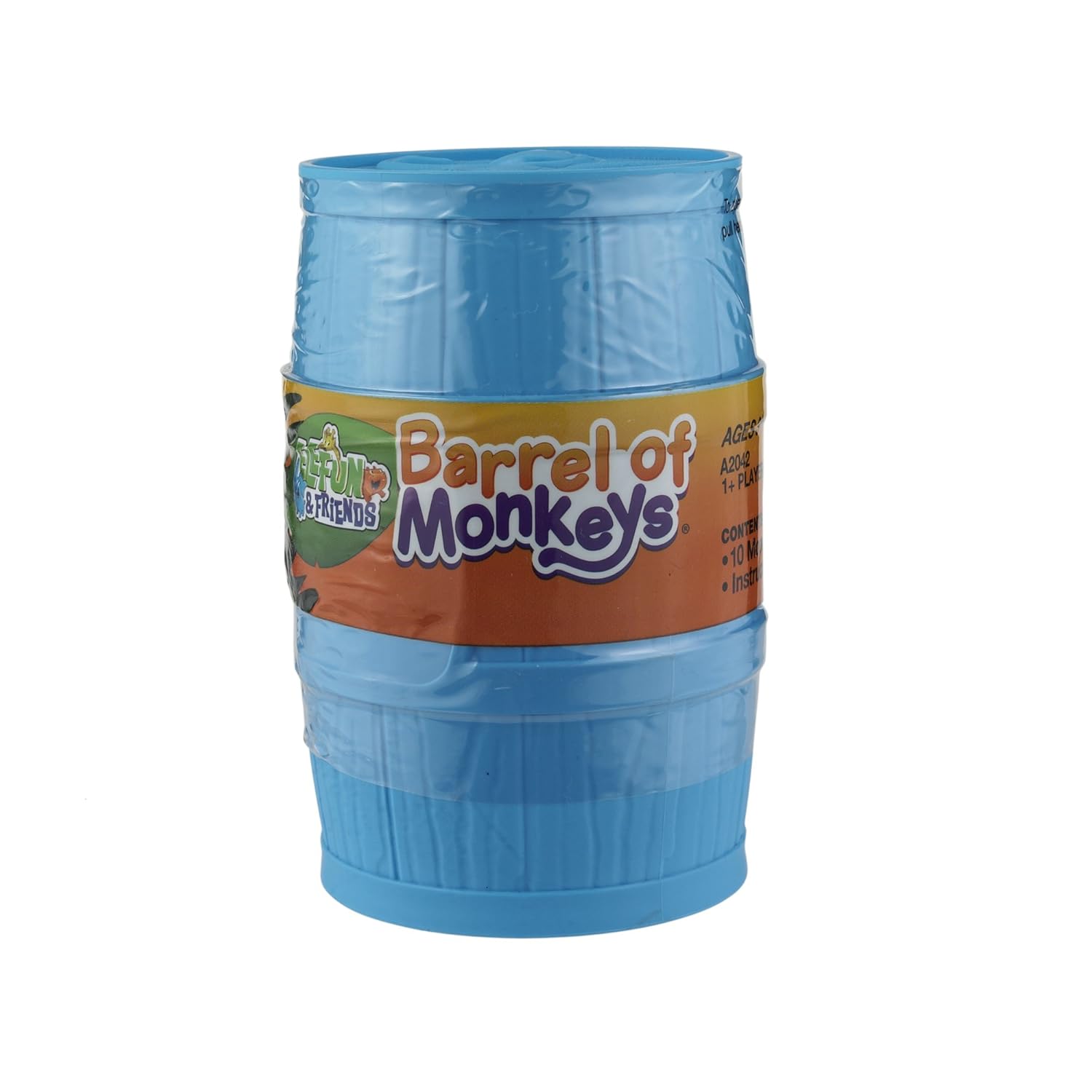
Remember the old game, Barrel of Monkeys? This would be a great time to play that game and practice counting in Spanish. 

This is a great printable you can do with your students. Give them instructions in Spanish on how many blue caps, red caps, etc. they need. Then also tell them in Spanish the order of the caps (you can make up a new order that's different from the book) that go on the peddler's head. Here are some more printables that are similar in which you can do a sequencing activity in Spanish.

Here are some free printables for the book. Yes, they are in English, but be creative and think of ways you could use them in Spanish. 

Here's such a cool idea...have your students recreate the story with actual manipulatives! This idea comes from Magical Movement Company. You can find it here.

CLICK HERE for more book activities.


Monday, June 13, 2016

El Nabo Gigante {Book Activities}

{Affiliate Links Used.}

Whenever I can use a story or a children's book to help my students learn it is so much more enjoyable. There is something about a story that sucks kids in and once you have their attention you can teach them more than through straight memorization or lecture. Let's take a look at a great book about a farming couple who grow a giant turnip. How will they ever be able to get the huge veggie out of the ground? El Nabo Gigante is a delightful tale of problem-solving and a group of farm animals.

First of all, there is a plethora of vocabulary to teach your students...lists of animals and veggies. Some of the colors are touched on in the story which can be a springboard for reviewing the colors with beginners. Also, three of the four seasons are mentioned which means you can review and/or teach those words.

Another opportunity with this book is to teach the parts of plants. Please see my post on the plant unit I use with my students.

Another great aspect of this book is that there are tons of words with the letters c and g. I take time to focus on these two sounds with my students that are learning to read Spanish. You can do this one of two ways...First, of all I create cards with some of the words from the book. {See the list below if you would like to make your own cards.}

Then I either teach my students the phonetic rules for c and g or I read off the cards and see if they can come up with the rules. In case you need a refresher, here are the rules.


  • The letter "c" makes the "s" sound when it is followed by "e" or "i". It makes the "k" sound when it is followed by "a", "o", or "u".
  • The letter "g" make an "h" sound when followed by "e" or "i". It makes the hard "g" sound (like in the word "gorilla") when followed by the other vowels.

Here is a list of words from the book you can put on cards for your students to practice reading:

"C" words: cama, crecer, arrancar, cintura, campesino, torcida, canarios, cocina, encima, cinco, ratoncito, cuello, cerditos, vaca, cabeza

"G" words: jugosa, gansos, agujero, gigante, gallinas, gatos, guisantes

Here is a drawing activity: At the beginning of the story you will notice that there are several animals that are described. For example: seis canarios amarillos, cinco gansos blancos, cuatro gallinas pintas, tres gatos negros, dos cerditos barrigudos, and una enorme vaca

Using this vocabulary, give your students instructions on what to draw, but mix up the vocabulary. So for example, say "tres cerditos amarillos" or "cinco vacas pintas" and see if they can draw them correctly.

You can also work with ordinal numbers with this story. On this page (just below) you can discuss in Spanish who is first, second, and so on.


Here is a great story sequencing activity (you would just need to write the cards in Spanish instead.) to go along with ordinal numbers.

And finally, you can always do a cooking project after reading this book. Make a stew with the vegetables mentioned in the book!

If you would like to read about more book activities in Spanish, visit here.


Thursday, April 7, 2016

¡Caramba! Game

{Affiliate links used.}

I am closing out the school year with my Spanish lessons and wanted a way to review the vocabulary we have been working on. I came across on Pinterest a post about Kaboom! It was created for elementary classrooms, but I thought it would be perfect for language learners also! So here is how you go about it:

First of all you will need...

Jumbo Craft Sticks
Sharpie Markers
Cups (Not see through)

Since I work with a lot of different levels of students I had several categories of vocabulary I wanted to use like house items, the alphabet, clothes, opposites, etc. I decided to color-code the sticks  on one end. This helps with two things. Kids will know how to put them in the cup with the colored part sticking out. This allows me to  select which sets of vocabulary to use with certain sets of students. For example, I know that the orange sticks are emotions and the pink sticks are foods. {See the final set of pictures for the list I made for myself.}


After you color the tips, you write one word towards the other end of the stick. I tend to use about 15 sticks for a vocabulary-themed set. Three of those sticks will have the word "Caramba" written on them. The rest will have vocabulary words you want kids to review.


To play the game you put one set (or maybe two or three if you have more advanced students) in a cup with the colored tips up. Students take turns pulling a stick out of the cup and giving the translation of the word. They keep the stick if they can say what it means in English. Otherwise, they put it back in the cup if they don't know. If they pull a "Caramba" stick they have to put back ALL their sticks! I time the game for about three minutes. The student with the most sticks at the end wins!

This is a fun way to review vocabulary which at times can be tedious!


Sunday, November 1, 2015

Christmas Teaching Resources in Spanish {Free Printable}

{Affiliate links used.}

Early November is the perfect time to start thinking of what you will be teaching your students around the Christmas season. Since I only teach my Spanish students the first two weeks of December I need to begin a littler earlier. There have been many winters where I haven't spent anytime on Christmas vocabulary and the like. This year I decided to get a jumpstart on it...

Here are some simple ideas you can incorporate into your teaching during the holidays...


I recently came across Christmas Spot It! Game. So exciting! My students LOVE Spot it! games. I find them to be the best game out there that is pre-made and helps build my students vocabulary quickly. Take a look at this post on how to play it when you are teaching students the new vocabulary for the game. It has to be modified slightly until they master the words. Since one of the biggest challenges of this game is to have a list in Spanish of all the items, I have provided one here for you. Please download it and use it!

Spot It! Christmas Vocabulary

Here are a few children's books to read during the season:

La Mejor Navidad De Froggy- One of the favorite series for my students are Froggy books. They love the humor in them. This one (like most of the Froggy books) is out-of-print, but is cheap on the used market at Amazon.

Un Día una Señora se Tragó una Campana - A cute, shorter story for the younger set similar to "There Once Was an Old Lady that Swallowed a Fly".

Estela reina de la nieve - Not specifically a Christmas book, but because it deals with snow it would be a great book for December. Estela has such cute and funny conversations with her little brother, Samuel!

Un Dia de Nieve -A classic about playing in the snow.

Celebra La Navidad Y El Dia De Los Reyes Magos- I haven't gotten this book yet, but I love Alma Flor Ada's books. This story is set during the Day of the Three Kings.


Here are a few more Christmas resources:

Christmas I Spy- I would use this to practice vocabulary and counting with my younger students.

Winter I Spy


Here are printable cards to use during December. If you print out two sets you can play Go Fish and Memory with them.

Spanish Playground has a post with tons of Christmas-related printables. Check it out!

Any other ideas for teaching Spanish during the Christmas season? I would love to hear from you!

Wednesday, July 15, 2015

Spanish Preschool Fun

{Affiliate Links Used.}

I recently purchased two games to use with the youngest of my students (preschool through early elementary). Pengoloo and Snug as a Bug in a Rug are great games to review colors in any language. And Snug as a Bug in a Rug also reviews shapes, some simple numbers, and the words "big" and "little".

Pengoloo  is a wooden game with hollow penguins who "sit" on different colored eggs. Each player gets an "iceberg" with the numbers 1-6. Players roll a die with colors on them (the colors of the rainbow). The goal is then for them to collect penguins that have that colored egg underneath them. To win the game a player has to collect six penguins. While we play I have my students tell me the color they rolled and also the color of the eggs that they choose.

Snug as a Bug in a Rug has three levels of play and is a cooperative game in which the players try to get all the colored bugs "under the rug" (the game board) before the three stink bugs get on the board. As students play I have them identify the items they are looking for on the bug (i.e. rojo, cuadrado, tres, etc.).

Both of these games created a lot of high interest and motivated my students to review the vocabulary. I also like the fact that I can use these games with two of my Spanish units: Polar Animals and Insects.


Do you have any great game suggestions that can be used in Spanish (or another language) to review vocabulary? I would love to hear about them!

Sunday, April 19, 2015

Plant Unit in Spanish {With Free Printables}


{This blog uses affiliate links.}

I am gearing up to do a plant unit this summer with some of my students. This unit is really going to focus on the parts of a plant and which parts we eat. We will touch on the life cycle of a plant and their needs (sun, water, soil, etc.). So here is a list of resources if you want to do a plant unit with your own students.

I love reading children's books in Spanish for each unit I do with my students. Some of the books I read can be informational, but I love reading stories that incorporate the theme we are studying. Here is a list of what we will be reading...

Como crece una semilla- A "Let's Read and Find Out" book on how seeds grow.

Arriba, Abajo y Alrededor  - This is a great book to teach/review the names of some vegetables and learn the three prepositions from the title. One of my favorites for younger kids.

La Gallinita Roja y la Espiga Trigo- A traditional story about how wheat grows to eventually be made into bread and how important it is to help others.

El Nabo Gigante-A hilarious story about a gigantic turnip.

El Flamboyan Amarillo-The story of a boy who grows a tree and gets a surprise!

La Semilla de Zanahoria-A classic story for younger kids about a carrot that takes forever to sprout.
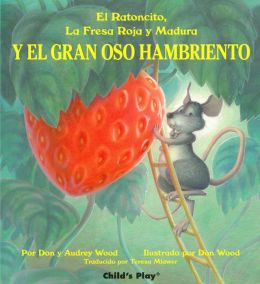


El Ratoncito, La Fresa Roja Y Madura y El Gran Oso Hambriento-A little mouse tries to save a strawberry from a hungry bear.

Here is a list of other resources and activities I will be doing with my students...


One of the activities we will be doing is playing a "Collect It" game. I made the above labels with the different parts of a plant to display during the game. I then made little cards with different types of fruits and veggies on them. {You can find the pictures here.} Here is how you play...Make sure you have made enough cards so that each student that is playing can collect each part of the plant. For example: Radishes are roots, peas are seeds, etc. The goal is for each student to end up with six items each one representing the six parts of a plant. You can make a few extra cards if you like. You start playing by laying all the cards face down. Each student takes a turn picking up a card. If they need that card they lay it face up in front of them. If it is a duplicate part then they return the card and lose their turn. The first to collect the six parts wins.  NOTE: Some of the veggies can be tricky. For example, did you know that potatoes are actually part of the stem? And onions are actually leaves not roots even though we call them root vegetables? So make sure you know what is what before playing with the kids.

Pumpkin Life Cycle War Card Game-Anytime I teach a life cycle {like the life cycle of a plant} I teach/review the ordinal numbers. This game is great for this! I know it is in English, but I will use it to review Spanish vocabulary. When kids lay down their cards they will have to say the stage in Spanish or the ordinal number in Spanish {depending on how we decide to play that round.}

Fold and Learn Plant Parts {in Spanish or English}

Plant Unit in Spanish

Roll and Build a Flower Game-To review the parts of a flower

Finally, here is a printable that I give to my parents on what their children are learning. It is the basic vocabulary for the unit.


Also, here is a file for the parts of a plant labels for the Collect It game...


Enjoy exploring plants with your students!