Tuesday, May 28, 2019

Spanish Scavenger Hunt


{Affiliate Links Used}

I am currently setting up for my summer camps and was looking for some extra activities to do with my more advanced students that are reading. I found this set and decided to turn it into a scavenger hunt. It is used to teach young ones the alphabet, but I found that it was perfect to hide items (included in the set) for my students to find. 

In the set, there are 26 acorns (bellotas) and 26 little plastic items that can fit in the acorns. I set up the hunt to have the possibility of five teams (great for about 10-15 kids). If you have less than five teams that's ok. You can still set the game up and put all the acorns out even if they aren't going to all be picked up. It will add to the challenge. If you have around 20 kids then you will need two sets.

I have created a file with the scavenger hunt lists already set up. You can find them here. (Scavenger hunt document) You will see two versions of the scavenger hunt with five groups each. The first number refers to which version. The second number refers to the group. At the end of the file, there is the word, "Socorro" printed several times. I will hand out one of these to each team in case they need help with a word. They can hand the SOCORRO paper to me at any time during the hunt to get a definition.

Set up the acorns with the correct items according to the document. Hide them outdoors (or you could do this in a classroom if it's big enough). Give each team (groups of two or three students) one list of what they need to find and a SOCORRO paper. Tell them GO and see which team can find all their items first. 

Please note that there will be one extra acorn and item that won't be used. You can leave them out or you can tell your students that once they have collected their five items and have had them checked by the teacher that they then need to go find the last acorn (which I am going to leave empty-la bellota vacía).

Also, instruct students that if they open an acorn and it's not the one they need then they will need to make sure they put the item back in the acorn and close it tightly before putting it back in its hiding space.  Otherwise, it will be mayhem!😱

Here's the set you need: Acorn Scavenger Hunt Set

And here's the file to set it up and play: Two Versions of the Hunt

Have fun!

Monday, March 18, 2019

Las Banderas Volteadas (Flag Game)

{Affiliate links used.}

This summer I will be hosting a Spanish camp where we will focus a bit more on geography and the flags of the Spanish-speaking countries. I have been coming up with activities (games and crafts) to focus on the flags. (You can see more ideas here.)  I recently came across a game called Flipping Flags in which you flip over cards with three flags on them. Those playing keep turning over cards on the table until they see a match. As soon as they do, they call out the name of the country. It is fast-paced and looked fun. The only problem was that it contained all the flags from around the world. I only wanted to focus on the 21 Spanish-speaking countries. 


I had recently bought a thematic unit on Spanish-speaking countries from The Enlightened Elephant (You can see it here.). I printed out the flags at a reduced size. They needed to be small enough to fit three of them on one 4 inch by 3 inch card.  I printed out about 10 copies of each flag so that I could make a ton of cards. I then put three different flags on each card and then laminated them. You don't have to worry about which three to put on a card just make sure that they are different. I ended up with about 60 cards give or take which will allow me to split up the cards and have two games going with two different small groups (2-5 players would work).

Here's how you play:


  • Give each player an equal amount of cards.
  • Players don't look at the cards. Instead, they place the stack face down in front of them.
  • One player announces "Volteemos" and everyone flips over a card from their stack.
  • If there is a match, then the first player to call out the country with matching flags gets those two cards.
  • If there is no match then leave the flipped cards on the table and keep playing by calling out "Volteemos" and flipping over cards until a match is seen. It can then be called out, but remember, the player can only pick up the two cards that he/she calls and that match. All the rest of the cards are left on the table. 
  • You can set a timer and the player with the most cards at the end wins.
This is a great way to get kids looking at the flags which in turn will help them recognize the flags later on.  Have fun!

Saturday, March 16, 2019

Flag Relay Game

{Affiliate links used.}

This summer will be the third year I have done Spanish camps. I am so looking forward to it! My more advanced students will be working with a bit more geography and with the flags of Spanish-speaking countries. I was trying to come up with ideas on to get them more familiar with the flags. We will paint some of the flags on rocks (see the end of this post for more information). We will also be making the flags out of Legos (See Mundo de Pepita's post about this activity HERE.) But I also wanted a game we could do that would get them moving.

So I decided to make a relay game out of the flags...


I picked out ten of the 21 flags. I limit my camps to ten kids at a time so with this game they can either work by themselves or in pairs. Basically, they will line up at the start line, and I will give each student or pair a country. Out in the field in front of them will be all the flag pieces. They will have to race to collect the correct pieces of their flag and put it together at the start line. Because my students are not going to know the flags at the beginning I will be providing them a paper with all the flags on them for reference.

I started by cutting the appropriate color cardstock into pieces to make the ten flags I chose (see above). I then when and printed off any coats of arms or stars that were needed. All of the pieces are laminated for durability. While the game won't be completely fair (some flags will have a few more pieces than others), I think it will be a fun way to work with them.

See below for a few more activities related to flags!


Other ideas for flags?


Collect some rocks and get painting! We will be using acrylic paint (like this set) to paint several of the flags. You can seal the paint afterward with this sealer.


I bought a lot of sidewalk chalk (Here's a big pack of it.) in order for my students to draw flags. They really enjoyed this activity!

Any other ideas for flags? I would love to hear them!


Monday, March 11, 2019

Spanish Camp - Discoverers

Join me in June for four days to learn some Spanish through cultural crafts, games, stories, and fun! This camp is for kids who have had a year or less exposure to the language and who have NOT done a previous camp or ¡Explora Español! class with me. Each day will be spent learning some basics of Spanish through games and stories and focusing on one of the Spanish-speaking countries through a craft.

Below are three of the four crafts we will be doing...


{La Boca Neighborhood, Buenos Aires, Argentina}

{Molas from Panama}

{Personal Piñatas}

The Details...

K-3rd Graders     June 3-6 (Monday-Thursday)  2-4pm
4th-8th Graders   June 10-13  (Monday-Thursday)  2-4pm

The cost is $80 (non-refundable) and must be paid in advance to secure your child(ren)'s spot.

Contact Debbie through her Facebook page at Debbie's Spanish Learning for more information and sign-up instructions.

______________________________________________________________________________

Debbie has been teaching Spanish for over 25 years. She has a passion for teaching kids the language and sharing with them the cultures and places where it is spoken. It is her hope through teaching the language to instill a love in her students for exploring the world around them.

Spanish Camp - Explorers


Join me in June for four days to further extend your child(ren)'s knowledge of  Spanish through cultural crafts, games, stories, and fun! This camp is for kids who have some exposure to the language or who have done a previous camp or ¡Explora Español! class with me. This year we will explore the countries of Costa Rica, Peru, and Guatemala plus explore the geography and flags of all the Spanish-speaking countries.

Below are two of the four crafts we will be doing...


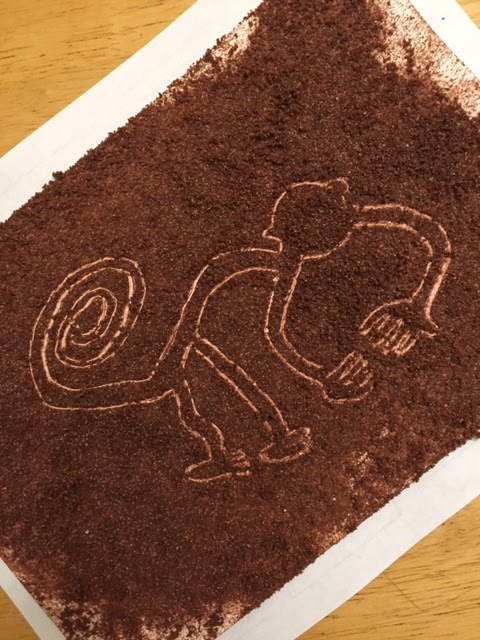
{The Nazca Lines of Peru}

{The Quetzal bird of Guatemala}


The Details...

K-3rd Graders    June 24-27 (Monday-Thursday)  2-4pm
4th-8th Graders  June 17-20 (Monday-Thursday)  2-4pm

The cost is $80 (non-refundable) and must be paid in advance to secure your child(ren)'s spot.


Contact Debbie through her Facebook page at Debbie's Spanish Learning for more information and sign-up instructions.


______________________________________________________________________________

Debbie has been teaching Spanish for over 25 years. She has a passion for teaching kids the language and sharing with them the cultures and places where it is spoken. It is her hope through teaching the language to instill a love in her students for exploring the world around them.

Saturday, February 2, 2019

A Simple Weather Craft for Language Learners


I have been teaching a six-session class called ¡Explora Español! this year. It combines language learning with simple crafts. Thus far, I had not found an easy idea to do with weather that I really like until I came across this photo.

{Affiliate Links Used.}

My goal is to first teach the vocabulary and then do the craft completely in the target language by giving step-by-step instructions.

Here are the items you need:


Have fun creating and using the language!


Wednesday, October 3, 2018

Culture, Crafts, and Language Learning


{Affiliate Links Used}

It's been SEVERAL months since I posted. Life has been much busier than I ever imagined. This past summer I did Spanish camps and loved teaching more kids the language and introducing them to the cultures where Spanish is spoken. At some point, I hope to do some posts on those adventures and share my teaching ideas.

This fall I decided to offer a new type of class... ¡Explora Español!, a six-week class that gives kids a taste of Spanish through culture and crafts. I have really enjoyed this class more than I would have imagined. With each week, I teach a bit of Spanish and then connect it to a cultural component which leads into a craft. Let's take a look at one of the classes I did to see how it all works together...

One week I taught the kids body parts. Since I tend to use Mr. Potato Head in my regular classes when teaching body parts I figured I would do the same in my exploratory class also. Then it hit me. Potatoes are originally from South America. There was a tie-in. So after teaching body parts, we talked about the potato and where it came from. I mentioned the many varieties out there...many more than my students had ever seen. We then reviewed the body parts using Mr. Potato Head. I then gave each student a potato and we got to work. This craft was done mostly in Spanish. We started with the "ojos" and did the complete face. The sombrero and zapatos were next. We finished by placing cut pipe cleaners on the sides for brazos. 


The paper parts I cut out ahead of time to save time. {Also, it is a good idea to wash and dry the potatoes ahead of time so the glue will stick.} You can find several templates online like here. Make sure to resize them so they will fit on the potatoes you are using.  We would review the name of the body part in Spanish and then students would put glue {We used this one, and it works well.} on the piece. Because the potatoes are round it helped to hold the pieces in place for a few seconds. I had the students count to twenty in Spanish before taking their fingers off one of the pieces. With the shoes, it was helpful to use these glue dots instead of the liquid glue. Aren't they so cute?

Here are some other ideas for connecting language, culture, and crafts into your lessons {You can click on the link for each craft to get ideas}:

Names of animals-- Talk about the importance of llamas in South America-- Paint a llama 
Clothing vocabulary-- Talk about Guatemala and worry dolls-- Make a worry doll


House Vocabulary-- Talk about the neighborhood of La Boca, Buenos Aires, Argentina-- Make "La Boca Houses"
Weather Vocabulary-- Talk about the Atacama Desert in Chile-- Make a Chilean rainstick
Fruit and Veggie vocabulary-- Talk about Chile and Peru and arpilleras-- Make an arpillera
Telling time-- Talk about the artist Salvador Dalí-- Make melting clocks

Do you have any other connections for teaching language, culture and then adding a craft? I would love to hear them!!

Tuesday, March 20, 2018

Easter Island {Cultural Craft for Spanish Students}


{Affiliate Links Used}

I am gearing up for another summer of Spanish camps and so looking forward to it. My camps are composed of language practice, cultural crafts, games, geography, and stories. It is a great introduction for kids in the language. You can find all my posts about summer camp if you click here.

Last year we made personal piñatas, molas, Chilean rainsticks, and a few other cultural crafts. For the kids that will be returning this year, I needed to have some new material to teach them and some new crafts. One of the days we will focus on body parts and the country of Chile so I thought it would be a great opportunity to make Moai, the famous Easter Island statues. 

I wanted an easy, quick way for students to make the statues without us taking too much time. I happened to find this ice cube mold and thought it would be perfect! (You can find it here.) Next I wanted a no-mess, easy clean-up clay that would air dry. This air dry clay is perfect, and I bought several packages in gray to make the heads with. To add to the educational value of the craft we are going to model the actual island (which is triangular) and  add a little bit of the ocean around it. I am thinking that I will make the clay for the island and the water to save on money. You can find a recipe here.


Along with making the islands, we will be spending sometime learning/reviewing body parts. I have made some extra statues in order to play a game that I saw online a few months back. Here's how it is done: You create two lines of students and have them face each other so that each kid has a partner. They need to be seated on the floor/ground. Place between each set of kids a Moai statue. Then begin to call out body parts in Spanish. Whatever body part is called the students have to place their hands on that part of themselves. So for example, if I say "cabeza" they will put their hands on their head. Call out several body parts. Then at some point say "Vayan" (or even "estatua") which means the pairs have to grab the little statue that is between them. Whoever grabs it first between the two kids wins and gets to stay in the game. Have the remaining that are still playing pair up with a new partner and do another round. Continue until you have only one student remaining. You can modify this game to make it a little less competitive for younger kids who sometimes struggle with winning and losing. Don't have anyone exit the game. Let everyone continue playing no matter who got the statue first.


I am also planning on doing a scavenger hunt with the statues by hiding them in an outdoor area and having the students search for them. I will probably do directions in the target language for older kids.

Here are some other resources to use in conjunction with this craft...

For my summer camps I limit the number of students so that kids get to practice in the language. So I will probably be buying several sets of these excavation kits for kids to work on in pairs. They get to dig up some Moai! (You can find them here.)

Also, have you been to Mundo de Pepita? It is an awesome blog with tons of resources and ideas for teaching Spanish to children. She also has a Teachers pay Teachers store which you can find HERE. She recently came out with a bulletin board set for the country of Chile! I will be using it during my camps as I like to have visual representations of the different countries we study. The set includes Moai, guanacos, the Chilean flag, some of the flora of the country, and a few other items.


Finally, here is a game to use, especially if you are breaking your students into groups to do center work. They can call out the numbers in Spanish as they play. The game is called Sneaky Statues and can be ordered HERE.

If you have any other ideas to go along with the Moai I would love to hear them!!

Monday, January 29, 2018

Teaching Young Kids Spanish Numbers 11-20


{Affiliate links used.}


When it comes to counting in Spanish, once kids have 1-20 memorized the numbers up to 100 become easier. Most kids in the US already know 1-10 in Spanish or at least most of those numbers. Eleven through twenty tend to be more challenging. Last week I did a simple activity with some of my young students to get them counting and help them memorize their numbers. The key ingredient? STICKERS!

There is something motivating about stickers for kids. While there isn't much prep to this activity it does require stickers in bulk. I also prefer to have different colored stickers so that we can practice the colors. Just a word of warning...we found that stickers shaped like stars or other intricate cutouts are harder for young hands. The rounder ones worked better. Here are some resources:

Colored Smiley Faces
Colorful Paw Print Stickers
Star Stickers (these are actually round stickers)
Multi-Colored Stickers
Multi-Colored Stickers II
Dinosaurs
Furry Friends

I cut sheets in half to hand out to students making sure I cut them so they have a variety of colors. Each students will need several (about four) half sheets. I also provide each student with a piece of paper with the numbers 11-20 written down the side (see above picture). I then call out a number and color (the color is optional) and the students have to find that number on their paper and put the correct number of stickers in a line by that number. They are required to count in Spanish while they do this.

So here are some tips for this activity:


  • Make sure you have already spent some time working with the numbers. Don't do this activity right after introducing 11-20.


  • The stickers are highly motivating. I tell my students that as I walk around and listen if I can hear them counting in Spanish they will get extra stickers at the end to take home.


  • Be prepared for some students to lose track as they count and get a little frustrated. Some students can count and not lose track; others struggle because they are hearing their classmates around them counting and then they lose track. To deal with this it is best to separate students so they aren't so close together. I also help those that lose track by counting with them from time to time. It can be a struggle, but in the end they learn the numbers really well.


  • I don't do all the numbers 11-20 with stickers. The activity would be way too long for young kids. So I do about seven of the numbers and the rest are left blank or they can do them at home. I make sure I call out the number 20 so that they get practice going through all the teen numbers.


  • Walk around and listen to them count! Help if they get stuck. Recount with them if need be. 


Soon they will be counting to twenty with ease!

Monday, January 15, 2018

Online Listening Activities {Free Printable}


There are so many more opportunities for students these days to listen to Spanish as the internet and podcasts have opened up a whole new world. When I was learning Spanish (oh, so long ago!), your options were to go to a language lab or use tapes! So I would like to share with you two options (among the many) that I use with my students and a free printable to use with them.

Veinte Mundos is an online magazine for language learners. There are a plethora of articles (close to 200) categorized for students by intermediate and advanced levels. These articles include audio, the transcript of what was being said, comprehension questions, defined words, and other videos related to the article. I love that culture is taught through the articles. Students can learn about dulce de leche, biblioburro, tapas, and so much more!

Duolingo has just introduced a new podcast! These stories are for intermediate students and are bilingual. My understanding is that they are real life stories. The Spanish is a bit slower and English is injected throughout the story. These podcasts are definitely for high schoolers and up who are still struggling in their listening skills. My favorite podcast so far has been Memorias y Milanesas which touches on a compelling story of the Falklands War in 1982.

If you would like a follow-up activity, see the printable below. It can be used with the podcasts from Duolingo or with the Veinte Mundos articles. Students need to identify the places that are mentioned on the world map, make a list of vocabulary they don't know, and write a summary of what they listened to in Spanish.

You can download the free printable HERE.

Tuesday, January 2, 2018

Valentine's Day Ideas for Spanish Class

{Affiliate links used.}

El Día de San Valentin can be called by many different names depending on which country you are in. It's El Día de los Enamorados (Argentina and Chile), El Día del Amor y La Amistad (Mexico, Colombia, Costa Rica, Ecuador) or El Día del Cariño (Guatemala). Regardless of its name, it's a great time to do some activities surrounding the ideas of love and friendship.

Need some ideas for Valentine's Day to use in your lessons in February? Here's a list of books, games, and ideas!

Books

Adivina Cuánto Te Quiero-A sweet book between a father and son and their love for each other.


El Primer Beso de Froggy-My students love Froggy books! This one is about the gifts and the kiss he receives from Froguilina.

Mi Amor Por Ti-Cute book that uses numbers 1-10 and comparisons like "taller than" and "bigger than".

Oso Cariñoso y La Tarjeta del Día de San Valentin-Story of a bear that has a hard time expressing his feelings.

El Primer San Valentin De Clifford


Activities

Have your students been learning prepositions? This ¿Dónde está el Cupido? drawing activity will help them review. I even modify this and make it into a listening activity instead of a reading one.

These charts allow your students to practice creating whole sentences with guidance. You will need some dice for the activity. The vocabulary is related to the holiday.

I am planning on using this silly sentence game this year with my students. It is based on the idea of "media naranja", the Spanish phrase for "soulmate".

A printable and ideas to go with it.

Using the photo given in this post you can have a question and answer session with your students. I like the fact that the photo is from a Valentine's Day fair in Chile.

Bingo
You could play bingo using Spanish vocabulary instead of English.

Valentine's Day Glyphs
I love these glyphs! Students answer the questions in Spanish by coloring each section of the picture with the color assigned to their answer. These would be great to do and then hang up to display!

Valentine Podcast Activities
These activities are for upper level students (Third year of Spanish in high school and above). All of it is in Spanish!


Extras

I love these lists that Spanish Mama has come up with...terms of endearment for kids and for couples. A great way to add more vocabulary and culture into your lesson!


Conversation Hearts in Spanish


Thursday, November 2, 2017

Dice Sentences {Free Printables}


{Affiliate Links Used}

Want a quick and easy way to do some review in groups with verbs and the formation of sentences? All you need are these printables {see below} and some colored dice {These work well.}. Basically, students roll four dice at a time (red, green, blue, and orange) and depending on what numbers they get on each colored die they create sentences.  Here's an example:


Let's pretend that a student rolls the following: red 2, green 3, blue 4, and orange 6. The sentence he or she creates would be "Tú estudias español todos los días en la biblioteca." These sentences can be done in groups out loud as a class starter. They can also be written by students. Small groups of students (3 to 5) tend to work well for this activity. 

I have created four printables: 


You will notice with some of the charts the students create a sentence that conveys four pieces of information: who, what happens, when, where. Other charts have three pieces of information and then the type of sentence they are to create (affirmative, negative, interrogative). This adds another level to just straight sentences and makes them think about how to form different types of sentences.


So pull out some colored dice and get your students forming sentences!

Friday, October 20, 2017

Hide-N-Seek Vocabulary Game (for Second Language Learning)

{Affiliate Links Used}

I struggle sometimes on how to get my youngest students to use the language especially when they are in the first few months of exposure to Spanish. The first problem is that with lower elementary-age students their attention span is very short, and when you add the fact that they have limited vocabulary at the beginning it can be challenging to find activities to get them talking in the target language. This week though I came across an activity that really worked! Not only does this activity require that they speak in Spanish, but it incorporates repetition of the vocabulary in a way that keeps them motivated. Here's how it works...


I create picture cards with the vocabulary on them we are working on. The ones you see here are for the weather, but the cards could be any group of vocabulary as long as you can use pictures: clothing, rooms in a house, places in a city, foods, etc. I laminate the cards (VERY IMPORTANT) so that I can use the dot stickers on the back of them. If the cards aren't laminated then you won't be able to get the sticker off as easily.  I lay out the cards face up on the table. If you have a large group of students you can make bigger cards and hang them up. Then I ask my students in the target language to turn around (away from the cards) and close their eyes (young ones are expert "peekers" so I have them do both actions). I then take a colored dot (See these here as they are easy to remove.) and stick it to the back of one of the cards. Then all my students can turn around and open their eyes. They take turns asking in the target language about a card to see if the dot is behind it.


So for example, if we are working on weather words they would ask, "¿Está nublado?" or "¿Hace viento?". I then reveal the underneath of the card to show them whether the dot is there or not. After I have hidden the dot a few times, I let some of my students do the hiding. If you have a large group, you may not be able to let everyone hide each time you play the game. So you may want to keep track of who has hidden the dot so that next time other students can do it. My students absolutely LOVE hiding the sticker and being in charge of answering the questions and revealing the backside of the cards. Another variation I do (normally at the end of the activity) is for me to "hide" the dot one more time. However, this last time around, I don't actually hide the dot on one of the cards. I put it some place else out of sight. This forces the students to ask about ALL the cards and review all the vocabulary. When the last card is revealed there may be some surprised looks! 😊

While I have used this with great success with elementary-age kids, it can be used as a quick review for older students (like in high school). I love how it requires students to use the language and how they get to hear the words/phrases over and over again. The other added benefit? If a child has the task of hiding the dot, he or she then also has to practice finding which card the other student is asking about. There's plenty of repetition and review without it being boring!


Tuesday, October 3, 2017

Motivate Target Language Speaking


{Affiliate links used}

Have you ever been to a baby shower where they hand you a clothespin or two and forbid you to say the word "baby"? If you do, another party guest can take your pin. The one with the most pins at the end of the party wins a prize. I have been to tons of baby showers and even some wedding showers that have played this game...

So today I was teaching Spanish to a small group of kids who were speaking WAY TOO MUCH English during the lesson, and the idea hit! Why not do the same thing with my students? So I pulled out some clothespins and gave each student about three of them and told them the rules. I was thrilled at how well this worked! My students immediately started to strive to speak Spanish. When they couldn't communicate in the target language they acted out to the best of their ability what they were trying to say. It was stretching for them and satisfying for me to watch them go through the process, or shall we say...the struggle.

Here are a few tips to implement this idea:

  • Limit the game through groups. If you teach a whole classroom, you might want to break the kids down into groups. They may only take from those in their group. Those they sit closest to would be the ideal candidates.

  • Define the time. How long will you maintain the game? With bigger groups, you may want to start small when it comes to length of time...maybe have them complete one or two activities while maintaining communication in the target language.


  • Be creative with the item you use. It doesn't have to be clothespins. At my daughter-in-law's bridal shower this past summer we played the game with gaudy plastic rings. You just need an item that they can attach to themselves so they don't lose it unless they start speaking in English.  Binder clips would work. These smiley face clips would be cute. There are also decorated clothespins like these that might be fun.

  • I give my students the option to use English once during the session if they have a question about what they should be doing in the lesson. They must request from me in the target language the ability to speak in English. They are allowed one question, and that's it, which makes them really think through how to avoid English until they absolutely need it. Many students will opt to not even request a question in English. 


Have fun! By limiting English you will find that your students will become more animated with their gestures and more creative in their communication. Another side benefit? Your classroom will become a bit quieter since they can't speak in their native tongue!😊


Monday, September 18, 2017

Clothespin Monsters and Language Learning


{Affiliate links used.}

I am always looking for new ways to teach Spanish vocabulary I have taught for years. It adds spice to my lessons and also keeps the teacher (me) engaged. Last week I came across this post on making little monsters and decided to make them in all the colors that I have taught my students. I also laminated them and used this glue (click here) which is incredibly durable. In the post, she suggests playing games with pom poms (find them here) with the monsters. I am using the monsters and the pom poms to review colors. Here's how I do it:

I lay out all the monsters on the table and then give instructions in Spanish like "El monstruo rojo come azul." One of my students then needs to find the red monster and use him to pick up a blue pom pom to deposit in a nearby cup. Once I have done this enough with students, I then ask them to "be the teacher" and give instructions to fellow classmates. 

Another activity is to have small disposable bathroom cups for each child. Lay out all your pom poms on a table. Each child gets a clothespin monster to use. Time them for thirty seconds or one minute and have them fill their small cups with as many pom poms as possible using only the monster to get them in the cup. When time is up, have them count the pom poms in their cups in the target language and tell you how many they got.


I also have doll clothes that I use for teaching which can also be used with these monsters. Give students instructions on which colored monster is going to eat which article of clothing. Have them deposit the clothes in another container that serves as the "stomach" for the monsters. Actually, these monsters can be used for all kinds of vocabulary in this same manner as long as you have something for the students to pick up with them. 

If you have any more ideas on how to use these monsters in a language classroom I would love to hear them! 

Saturday, September 2, 2017

Word Pictures for Vocabulary Review


 {Affiliate Links Used.}

Want a simple activity that incorporates creativity with vocabulary learning? How about trying word pictures with your students? Pictures are drawn entirely with words. For each part of the picture, students write the word for that part over and over again to form the shape of the item. For example, if you are drawing a dress then you would write the word "dress" to create the shape of the dress.


The best way to start these pictures is with a pencil. Have your students lightly outline their drawing. Then using fine tip pens (I used these.), have your students write the word over the pencil lines. They should pick words that correspond to each part of the picture. There is a little bit of poetic license, for the face in the picture I could use cara (face), cabeza (head), or chica (girl). When they are done they can erase the pencil lines. Let your students be creative!


They will also need to decide how much they will break down the picture with vocabulary words. I had the option on the picture below to write the words "trunk" and "leaves" for the tree, but just opted to write "tree" in Spanish instead.


This simple activity is a great way to reinforce the vocabulary your students are learning. You can do pictures for all different kinds of sets of words: weather, body parts, clothing, parts of a house, furniture, cities, foods, etc. Have fun being creative!!