Showing posts with label Spring. Show all posts

Tuesday, April 11, 2017

Seasons Activities in Spanish {Free Printable}


{Affiliate Links Used.}

Seasons are hard words to remember in another language. Over the twenty years I have been teaching I find that even though it is only four vocabulary words they can be forgotten quickly. So I was really pleased to come across a book in Spanish that beautifully illustrates the changing of the seasons...


Las 4 Estaciones Desde el Gran Arbol shows the progression of the seasons with a tree in the forest. The animals around it come and go as the year passes. The weather changes. The plants grow and become dormant or die. And during the whole time there is an owl in the tree watching the events around him. The book has cut outs that allows you to see the animals in the tree. There are several activities that you can do as you read the book and then afterwards. Let's take a look...


For my students that can write I have them re-create the four seasons with pictures and words in Spanish. (You can download this page here.)  They can draw in the way a tree would look for each season and then label the squares with the correct word. I also have them add color and weather words related to each season in the appropriate square. Another set of vocabulary that could be added are the months in the appropriate season, but be careful with this! What if you are in the southern hemisphere? This would be a great time to discuss how summer happens in December, January, and February in South America (like in Argentina and Chile).

During the reading of the book you can point out all the animals that are throughout the story. One of the reasons that I love this book is because there are so many animals and they reoccur several times on the different pages. For younger kids, I call out the name of an animal and they can count them. For older kids this is a great time to play Spot It! (the animal version) to review the names of animals. (See here how I use Spot It! as a teaching tool AND game at the same time.)

For more advanced students that know their prepositions, you can do a drawing activity with them. Students start out with a blank piece of paper and you describe a scene with a tree in Spanish that they have to draw. Here's a sample description that could be drawn:

Hay un árbol grande con un sol brillante en el cielo. En el árbol hay dos búhos y tres ardillas. Debajo del árbol, hay una familia de zorros. Un zorro persigue una mariposa. El árbol tiene manzanas en las ramas y un nido lleno de huevos.

Finally, here are some resources that are great for working with the seasons...


Y De Pronto Es Primavera-A sweet story about waiting for spring to come.

Froggy Se Viste- Frogs are not supposed to go out in the snow and play! A story filled with winter words (especially clothing).

Un Recorrido Por Las Estaciones- Scenes from all the seasons with an emphasis on each month.

A simple puzzle for younger kids.  Actually, this concept for be great for kids if you make flashcards. Can they put the objects in the right season?

Finally, I use this vocabulary sorting activity with older students. It's a great way to familiarize them with more words that they need to put into one of the four seasons.


Wednesday, February 1, 2017

Teaching Ideas for Spanish in the Spring

(Affiliate Links Used.)

Here are several resources you can use during the Spring months as you teach Spanish...books, learning activities, and so much more! Happy Spring!


Spring Books in Spanish- Here's a list of great books to read during the spring months.


El Nabo Gigante spans not only the spring, but into the fall harvest time. This post has learning activities to go along with the book.


Arriba, Abajo, y Alrededor is a great gardening book in which you can focus on prepositions and words for vegetables.


Y De Pronto es Primavera- A sweet story of how spring can surprise us!


Plant Unit- I have created a plant unit that you could use during the spring months. Lots of vocabulary related to plant parts and types of veggies in this post!


Easter Resources- Here you can find some books, "emotion eggs", and other activities to do close to Easter.


Compound Words with Eggs- Last year my younger students worked with compound words in Spanish. We used Easter eggs to review their vocabulary!

I would love to hear what activities you do with your Spanish students during the spring months!


Monday, June 13, 2016

El Nabo Gigante {Book Activities}

{Affiliate Links Used.}

Whenever I can use a story or a children's book to help my students learn it is so much more enjoyable. There is something about a story that sucks kids in and once you have their attention you can teach them more than through straight memorization or lecture. Let's take a look at a great book about a farming couple who grow a giant turnip. How will they ever be able to get the huge veggie out of the ground? El Nabo Gigante is a delightful tale of problem-solving and a group of farm animals.

First of all, there is a plethora of vocabulary to teach your students...lists of animals and veggies. Some of the colors are touched on in the story which can be a springboard for reviewing the colors with beginners. Also, three of the four seasons are mentioned which means you can review and/or teach those words.

Another opportunity with this book is to teach the parts of plants. Please see my post on the plant unit I use with my students.

Another great aspect of this book is that there are tons of words with the letters c and g. I take time to focus on these two sounds with my students that are learning to read Spanish. You can do this one of two ways...First, of all I create cards with some of the words from the book. {See the list below if you would like to make your own cards.}

Then I either teach my students the phonetic rules for c and g or I read off the cards and see if they can come up with the rules. In case you need a refresher, here are the rules.


  • The letter "c" makes the "s" sound when it is followed by "e" or "i". It makes the "k" sound when it is followed by "a", "o", or "u".
  • The letter "g" make an "h" sound when followed by "e" or "i". It makes the hard "g" sound (like in the word "gorilla") when followed by the other vowels.

Here is a list of words from the book you can put on cards for your students to practice reading:

"C" words: cama, crecer, arrancar, cintura, campesino, torcida, canarios, cocina, encima, cinco, ratoncito, cuello, cerditos, vaca, cabeza

"G" words: jugosa, gansos, agujero, gigante, gallinas, gatos, guisantes

Here is a drawing activity: At the beginning of the story you will notice that there are several animals that are described. For example: seis canarios amarillos, cinco gansos blancos, cuatro gallinas pintas, tres gatos negros, dos cerditos barrigudos, and una enorme vaca

Using this vocabulary, give your students instructions on what to draw, but mix up the vocabulary. So for example, say "tres cerditos amarillos" or "cinco vacas pintas" and see if they can draw them correctly.

You can also work with ordinal numbers with this story. On this page (just below) you can discuss in Spanish who is first, second, and so on.


Here is a great story sequencing activity (you would just need to write the cards in Spanish instead.) to go along with ordinal numbers.

And finally, you can always do a cooking project after reading this book. Make a stew with the vegetables mentioned in the book!

If you would like to read about more book activities in Spanish, visit here.


Sunday, October 11, 2015

Teaching Seasons in Spanish

{Affiliate Links used.}

There are only four, but at times they are really hard to remember. The seasons can be a challenge to learn especially for younger kids. Here are a few teaching ideas for the seasons...

When I teach the seasons and if the students are old enough {junior high and up} I try to give them tips on how to memorize the names. Here are the ideas I use...

El otoño - It sounds similar to the word "autumn".

El invierno - This word actually comes from the word "to hibernate". I also teach my students that it is the "inverse" (opposite of summer). "Invierno" kind of sounds a little like "inverse" so sometimes that helps students remember.

La primavera - Spring comes from two words "prima" (We have words in English like "prime" and "premiere" which refer to "one" or "first") and "vera" (This is similar to the word "green", verde). So basically this word means "first green" which totally fits for spring!

El verano - Summer starts out with "ver" similar to "verde" the season that is all green.


One of the activities we do after I have introduced the seasons and months is to categorize the months into the four seasons. I do this with cards...I have four different pictures of trees to represent the seasons and twelve cards with the months on them. We do it for the northern hemisphere and then talk about the southern hemisphere since there are many Spanish-speaking countries in which the seasons are flipped like Argentina and Chile. Another version of this activity is for my students to categorize clothing and/or weather into the appropriate season.

For older students I have them do this page which lets them work with other vocabulary related to each season.


If you are exploring the seasons with younger kids then children's books are the way to go. Un recorrido por las estaciones covers all the seasons and months. It also has some cool information on the days of the week in the back.

Also, I have several posts on books for each season of the year...


Just recently I came across a cute book about waiting for spring called Y de pronto la primavera . Well worth the read to young kids!


So how do you teach the seasons? I would love to hear your ideas!

Sunday, April 19, 2015

Plant Unit in Spanish {With Free Printables}


{This blog uses affiliate links.}

I am gearing up to do a plant unit this summer with some of my students. This unit is really going to focus on the parts of a plant and which parts we eat. We will touch on the life cycle of a plant and their needs (sun, water, soil, etc.). So here is a list of resources if you want to do a plant unit with your own students.

I love reading children's books in Spanish for each unit I do with my students. Some of the books I read can be informational, but I love reading stories that incorporate the theme we are studying. Here is a list of what we will be reading...

Como crece una semilla- A "Let's Read and Find Out" book on how seeds grow.

Arriba, Abajo y Alrededor  - This is a great book to teach/review the names of some vegetables and learn the three prepositions from the title. One of my favorites for younger kids.

La Gallinita Roja y la Espiga Trigo- A traditional story about how wheat grows to eventually be made into bread and how important it is to help others.

El Nabo Gigante-A hilarious story about a gigantic turnip.

El Flamboyan Amarillo-The story of a boy who grows a tree and gets a surprise!

La Semilla de Zanahoria-A classic story for younger kids about a carrot that takes forever to sprout.
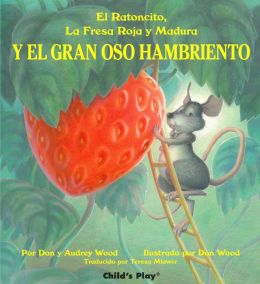


El Ratoncito, La Fresa Roja Y Madura y El Gran Oso Hambriento-A little mouse tries to save a strawberry from a hungry bear.

Here is a list of other resources and activities I will be doing with my students...


One of the activities we will be doing is playing a "Collect It" game. I made the above labels with the different parts of a plant to display during the game. I then made little cards with different types of fruits and veggies on them. {You can find the pictures here.} Here is how you play...Make sure you have made enough cards so that each student that is playing can collect each part of the plant. For example: Radishes are roots, peas are seeds, etc. The goal is for each student to end up with six items each one representing the six parts of a plant. You can make a few extra cards if you like. You start playing by laying all the cards face down. Each student takes a turn picking up a card. If they need that card they lay it face up in front of them. If it is a duplicate part then they return the card and lose their turn. The first to collect the six parts wins.  NOTE: Some of the veggies can be tricky. For example, did you know that potatoes are actually part of the stem? And onions are actually leaves not roots even though we call them root vegetables? So make sure you know what is what before playing with the kids.

Pumpkin Life Cycle War Card Game-Anytime I teach a life cycle {like the life cycle of a plant} I teach/review the ordinal numbers. This game is great for this! I know it is in English, but I will use it to review Spanish vocabulary. When kids lay down their cards they will have to say the stage in Spanish or the ordinal number in Spanish {depending on how we decide to play that round.}

Fold and Learn Plant Parts {in Spanish or English}

Plant Unit in Spanish

Roll and Build a Flower Game-To review the parts of a flower

Finally, here is a printable that I give to my parents on what their children are learning. It is the basic vocabulary for the unit.


Also, here is a file for the parts of a plant labels for the Collect It game...


Enjoy exploring plants with your students!

Friday, April 10, 2015

Spanish Books for Spring {for Kids}

{Affiliate links used. Thanks for supporting this blog.}

I love spring and the promise of warmer weather and growing green things out in the garden! When you live in Alaska spring holds a special place in your heart! So here is a collection of spring books to read to your kids/students in Spanish.  You can do all kinds of exploring with these books. Gardens, butterflies, and rain await you!


La Oruga Muy Hambrienta- A classic great for teaching the days of the week and food vocabulary.

El pollito que no quería salir del huevo- A cute book about a chick that doesn't want to hatch from his egg.

La Semilla de Zanahoria -Another simple classic about waiting for a carrot to pop up from the ground.

Como crece una semilla- A "Let's Read and Find Out" science book about how seeds grow.

Adivina Cuanto Te Quiero-A baby bunny wants to know how much he is loved.

Froggy al Bate- My Spanish students love Froggy books! Here is his adventure at bat.

¡Montones de mariquitas!- A counting book that teaches kids how to count by fives. You can use the story to practice counting by ones and fives.

Atrapados-We love Oliver Jeffers' books in Spanish around here! This is a comical story about a boy that gets his kite caught in a tree. What happens next is unbelievable!

Habia una vez una gota de lluvia and Habia una vez una semilla are two books I am going to be ordering soon to use during the spring months.

To see more spring activities for Spanish students check out these posts:

Insect unit
Ladybug unit
La Oruga Muy Hambrienta activities

Here is a plant unit that goes great with spring and/or summer!

Looking for other seasonal books?

Winter Books
Summer Books
Fall Books

Monday, February 2, 2015

Mi Calendario {Teaching Dates, Seasons, and Weather with a Free Printable}


Over my years of teaching Spanish to young kids, I have found that the calendar, seasons, and the weather can be a challenge for them to cement in their brains. It takes a lot of review, and the best way is to talk about it each day for awhile until the concept of the passing of time becomes familiar to them. I recently purchased this calendar at half price and have been using it with my students. I am seriously wondering if I bought the last one available {I know I did from the company I ordered it from}. I wanted to have a smaller take-home version for my parents to be able to use with their kids at home.

{Affiliate links used. Thanks for supporting this blog!}

So I created this calendar that reviews yesterday, today, tomorrow, the date, season and weather for the day. You can download it and print it using the link below. {On the screen the page looks off, but print it out and it will be fine.} I then laminated these pages using this laminator {If you are looking for a laminator to use at home this is it! Inexpensive and works really well!!}. By laminating them I can give one copy to each parent and they can have their kids use a dry erase marker to pick the date, days, etc. It can be used over and over again. {Note: Some colored dry erase markers are harder to remove. The black seems the easiest. Also, rubbing alcohol helps the cleaning process.}


So here is the file...There is also a second page with questions in Spanish that parents can use as they review the calendar each day.

Mi Calendario

Here are some more items to use with kids to teach weather and seasons...


Weather and Clothes Puzzle-With this puzzle you can go over clothes, weather, colors, and seasons.


Pink "Mi Calendario"-Similar to the one above that is no longer available.


Laminated Weather Chart in Spanish