Showing posts with label Printables. Show all posts

Thursday, November 2, 2017

Dice Sentences {Free Printables}


{Affiliate Links Used}

Want a quick and easy way to do some review in groups with verbs and the formation of sentences? All you need are these printables {see below} and some colored dice {These work well.}. Basically, students roll four dice at a time (red, green, blue, and orange) and depending on what numbers they get on each colored die they create sentences.  Here's an example:


Let's pretend that a student rolls the following: red 2, green 3, blue 4, and orange 6. The sentence he or she creates would be "Tú estudias español todos los días en la biblioteca." These sentences can be done in groups out loud as a class starter. They can also be written by students. Small groups of students (3 to 5) tend to work well for this activity. 

I have created four printables: 


You will notice with some of the charts the students create a sentence that conveys four pieces of information: who, what happens, when, where. Other charts have three pieces of information and then the type of sentence they are to create (affirmative, negative, interrogative). This adds another level to just straight sentences and makes them think about how to form different types of sentences.


So pull out some colored dice and get your students forming sentences!

Thursday, January 21, 2016

Cards and Conversations {Part 2}

{Affiliate links used.}

Earlier this month I posted about using a deck of Spanish Playing Cards and some printables I have created in order to get your students asking and answering questions in Spanish. I promised you one more printable which will be towards the end of this post, but first take a look at these posts if you aren't familiar with this activity...


Here is the fourth printable. Download it and get your students talking!!

Want more foreign language teaching tips? See my whole series.


Wednesday, January 6, 2016

Use A Deck of Cards for Conversations {Free Printable}

{Affiliate links used.}

One of my older posts that has been extremely popular is how to use a Spanish deck of cards to get your students talking. All you need are Spanish Playing Cards {about one deck per five students} and the printouts I provide.

La Baraja is the name of the deck used in Spanish-speaking countries.  It is smaller than the English version containing only forty cards in all.  It also has different suits: oros (coins), bastos (clubs), espadas (swords), and copas (cups).  Traditionally, each of the suits represented a different part of medieval society.  The oros were merchants. The bastos were the peasants.  The espadas were the military, and the copas represented the Church.


The face cards are also different.  There is the sota (like our Jack), the caballo (horse/knight), and the rey (king).  Interestingly, there are no cards with the numbers eight and nine on them.

To use the cards and the questions, just shuffle the cards and put them face down in the middle of the group (no more than five students).  One student picks up a card and finds the appropriate question based on the suit and number of the card.  He or she then asks the person next to them the question.  That student answers and then picks up a card to ask the next student and so on and so forth.  I find that this activity works well at the beginning or end of a lesson.  It doesn't take a lot of set-up especially if you have the decks on hand.  I have laminated my question sheets so that they can be used again and again.  All you have to do is pull the materials out and get your students talking!


Here is a NEW printable of questions! Come back later in the month and I will offer up a fourth printable to use with the Spanish deck!

Are you interested in getting teaching ideas for your language classroom? See all the posts in this series...


Wednesday, October 14, 2015

Color Theory in Spanish

{Affiliate links used.}

I love doing hands-on activities with my students when I can. We speak in Spanish as we go through whatever task we are doing. I recently had one of the moms of some of my students loan me a book that goes really well with reviewing colors and even getting into color theory a bit. Como Nacio El Arco Iris by Alma Flor Ada is a fable about how the rainbow came to be. In the story Azul, Rojo, and Amarillo get together to paint the world (which is only black, white, and gray). In the process they begin to mix their colors to get new ones. What I like about this story is that it is more involved and can be used with older kids. In the past I have used Pinta ratones when doing color mixing activities, but really that book is for the younger crowd.

I use this free printable from Mama Jenn to do our color mixing. We start out with the simple color wheel that has only the primary and secondary colors and then move onto the more advanced one. Here is some vocabulary you can use with your students as you do the activity...

First check out this color wheel in Spanish that gives all the color names even the tertiary ones. Here is another color wheel with vocabulary that is slightly different.

Mezclar – to mix
Primario – primary
Secundario – secondary
Terciario – tertiary
Las gotas – water drops (part of the color mixing activity)
Colores fríos – cool colors
Colores cálidos – warm colors

My students loved doing the color mixing after reading the book! 

And finally, here is another one of my posts on color activities for younger students in case you work more with early elementary kids. 

Wednesday, September 23, 2015

Listening and Drawing Activities {Free Printables}


I recently came across some wonderful drawing activities on Spanish Playground {By the way, if you are not familiar with this site and you teach Spanish to kids you REALLY need to check it out! It is an awesome resource!}. The site has a drawing activity with stick figures and one with houses. Instead of having my students read the descriptions to themselves, I read them out loud to see if they understood and then they did the drawings. I even branched out with these and incorporated different topics...

For the houses you can do the following topics:

house description {door, windows, color}
weather
seasons
items inside and outside of the house {Great for reviewing "adentro" and "afuera"}
items above and below in the house {Great for reviewing "arriba" and "abajo"}
time {Have the students draw a clock above the house and fill in the time}


For the stick figures you can do the following topics:

clothing/colors
emotions
weather
seasons
action words {For example, you can say "La chica escribe." and have them draw a pencil and paper near the girl.}

After I modeled several examples and they drew I then made the students do their own descriptions out loud. If you have a group of kids you can pick one child to describe a house or person and have the others students draw it. If you are just working with one student or your own child, have him or her describe and YOU do the drawing. Because I had modeled how to describe a house or person several times before handing over the reins to them, my students were very creative in their descriptions! They even incorporated more vocabulary than I did!

My students so enjoyed these activities that I decided to branch out a bit and make a few more. The first template can be used with places in a city or rooms in the house. The little circle up in the corner can be for the time of day or used as a face to draw the emotion of the person in that place.


The second template is a table setting. With this page you can describe what is on the plate and also use prepositions to have your students draw the silverware, cups, bowls, etc. Below you will find the printables for both of these pages along with some descriptions already typed up for you to get you started. For those of you that teach other languages feel free to use the templates and create your own descriptions in the target language you are teaching.


Here are the free printables!

Template for Places Drawings
Instructions for Places Drawings
Template for Food Drawings
Instructions for Food Drawings

Friday, September 4, 2015

Free Verb Charts for Commands and the Subjunctive in Spanish

{Affiliate links used.}

Last year I typed up verb charts for the indicative in Spanish. These charts are a great review and reference for your most advanced students. I have found that those students who have been introduced to all the verbs forms tend to mix them up. It is like all the information gets muddled in their brains before they eventually sort out when to use certain tenses and moods and how to form them. I finally took the time to create my last chart on the subjunctive and the command forms. You can print it out from the link below.  But first here are the other two charts from last year:

The Regular Indicative
The Irregulars in the Indicative

And don't forget this handy resource for your classroom and most advanced students...
501 Spanish Verbs

Saturday, May 30, 2015

Art and Speaking Skills in a Foreign Language Classroom {Free Printable}

{Affiliate links used.}

As a language teacher, any time you can mix culture with language skills you up the amount of learning in your lessons. Last year with one of my most advanced students I started printing off interesting pictures for us to discuss in Spanish. It then occurred to me that we could do the same activity with the great works from various Spanish/Hispanic artists. Not only will my students get exposed to beautiful artwork, but they will also be able to practice their speaking skills.

In order to set up this activity you need a set of questions you can use with any painting and copies of the art itself.  Below you will find a free printable in Spanish of questions you can ask your students in order to get them talking about different paintings. As far as collecting the art you want to use here are several options:
  • You can also use art books to show pictures. 
  • You can print them from the web. Here is my pinterest board on teaching art and Spanish. It contains lots of paintings, and I plan on adding more. 
Here is a list of artists/paintings I am planning on using:

  • Diego Velázquez {Las Meninas/Tres Músicos}
  • Fernando Botero {La Menina,/Terremoto en Popayan}
  • Alejandro Xul Solar {Cuidá y Abismos,/Vuell Villa}
  • Joan Miró {La Finca,/Caballo, Pipa y Flor Roja}
  • Pablo Picasso {El Guitarrista Viejo/La Sopa}
  • Diego Rivera {Cargador de Flores/Zapata}
  • Oscar Tintaya {More modern Bolivian artist with typical scenes of that area}
  • Salvador Dalí {La Persistencia de la Memoria}
  • Raúl Soldi {Sarita}
  • Joaquín Sorolla y Bastida 

Here is the free printable with questions you can use to discuss the paintings.


Have fun using art to keep your students speaking in Spanish!

Sunday, April 19, 2015

Plant Unit in Spanish {With Free Printables}


{This blog uses affiliate links.}

I am gearing up to do a plant unit this summer with some of my students. This unit is really going to focus on the parts of a plant and which parts we eat. We will touch on the life cycle of a plant and their needs (sun, water, soil, etc.). So here is a list of resources if you want to do a plant unit with your own students.

I love reading children's books in Spanish for each unit I do with my students. Some of the books I read can be informational, but I love reading stories that incorporate the theme we are studying. Here is a list of what we will be reading...

Como crece una semilla- A "Let's Read and Find Out" book on how seeds grow.

Arriba, Abajo y Alrededor  - This is a great book to teach/review the names of some vegetables and learn the three prepositions from the title. One of my favorites for younger kids.

La Gallinita Roja y la Espiga Trigo- A traditional story about how wheat grows to eventually be made into bread and how important it is to help others.

El Nabo Gigante-A hilarious story about a gigantic turnip.

El Flamboyan Amarillo-The story of a boy who grows a tree and gets a surprise!

La Semilla de Zanahoria-A classic story for younger kids about a carrot that takes forever to sprout.
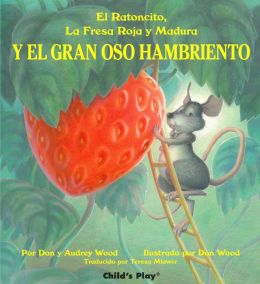


El Ratoncito, La Fresa Roja Y Madura y El Gran Oso Hambriento-A little mouse tries to save a strawberry from a hungry bear.

Here is a list of other resources and activities I will be doing with my students...


One of the activities we will be doing is playing a "Collect It" game. I made the above labels with the different parts of a plant to display during the game. I then made little cards with different types of fruits and veggies on them. {You can find the pictures here.} Here is how you play...Make sure you have made enough cards so that each student that is playing can collect each part of the plant. For example: Radishes are roots, peas are seeds, etc. The goal is for each student to end up with six items each one representing the six parts of a plant. You can make a few extra cards if you like. You start playing by laying all the cards face down. Each student takes a turn picking up a card. If they need that card they lay it face up in front of them. If it is a duplicate part then they return the card and lose their turn. The first to collect the six parts wins.  NOTE: Some of the veggies can be tricky. For example, did you know that potatoes are actually part of the stem? And onions are actually leaves not roots even though we call them root vegetables? So make sure you know what is what before playing with the kids.

Pumpkin Life Cycle War Card Game-Anytime I teach a life cycle {like the life cycle of a plant} I teach/review the ordinal numbers. This game is great for this! I know it is in English, but I will use it to review Spanish vocabulary. When kids lay down their cards they will have to say the stage in Spanish or the ordinal number in Spanish {depending on how we decide to play that round.}

Fold and Learn Plant Parts {in Spanish or English}

Plant Unit in Spanish

Roll and Build a Flower Game-To review the parts of a flower

Finally, here is a printable that I give to my parents on what their children are learning. It is the basic vocabulary for the unit.


Also, here is a file for the parts of a plant labels for the Collect It game...


Enjoy exploring plants with your students!

Wednesday, April 1, 2015

Solar System Unit in Spanish {Resources, Ideas, and Free Printable}

{Affiliate links used. Thanks for supporting this blog.}

This fall I will be teaching my younger students a solar system unit in Spanish. I LOVE doing these units as it gives them extra vocabulary that we wouldn't fit in otherwise. It also lets us explore a theme in depth. I am still in the process of putting the finishing touches on this unit, but here are the basics: vocabulary, resources, and ideas. 

Vocabulary and Grammatical Concepts:

Here is a free printable to use with all the vocabulary for this unit:


Teaching the Solar System is a great way to incorporate the ordinal numbers {first, second, third, etc.} when you teach/review the order of the planets. You can also teach vocabulary related to size {small, big} and distance {close to, far from, in between}. During this unit I plan to also review the verb "estar" because it relates to location.

Here are several children's books that we will be reading:


De vuelta a casa -A cute story of a little boy and a martian that he meets on the moon. Written and illustrated by Oliver Jeffers.

Cómo atrapar una estrella -Another adorable book by Oliver Jeffers on how to catch a star.

El Universo (Mi Pequeno Enciclopedia)-A simple informational book on the universe. I LOVE this series of books!

Llevé a la Luna A Pasear-A story about taking the moon for a walk.


Other resources:

Giant Magnetic Solar System- This set can be used throughout the unit for various activities. One idea? Use it to teach the ordinal numbers in Spanish while putting the planets in order.

Show relative distance between the planets- This is great to reinforce words like cerca, lejos, entre.

Galaxy Game

Simple Exercise to label the planets in Spanish

Idiomatic Expressions to teach with the word "LUNA"

El Sistem Solar Unit-on Teachers pay Teachers

Yo Tengo...Quien Tiene Solar System Game

Planets Lapbook in Spanish and English

El Sistema Solar posters

Enjoy teaching about the Solar System! If you have any other ideas I would love to hear them!

Tuesday, March 10, 2015

Resources for Teaching Una Carta a Dios {Free Printable}

{Photo courtesy of Capgros}
{Affiliate links used. Thanks for supporting this blog.}

I love when students get advanced enough to read literature in Spanish. The short story, "Una Carta a Dios" by Gregorio Lopez y Fuentes, is one of the first stories I have my students read. It can be found on the web or in the reader, Album {which I highly recommend if you have students that are beginning to read literature. Please see this post.}. The story incorporates tragedy and humor with a surprising punchline at the end. It is the perfect story to start with because of its high interest story line. Album has great comprehension questions, literary analysis, and language exercises, but there are also activities and resources online.  Here's a look at a few...

Online Vocab Cards for the story


Here's the vocabulary list I use with my students...


A lesson plan for Una Carta a Dios

A short biography on Gregorio Lopez y Fuentes

Do you know of any other resources for this short story? I would love to hear from you!


Saturday, February 21, 2015

Veinte Mundos {Helpful Website and Free Printable}


This past year I have been using Veinte Mundos with one of my advanced students to improve his Spanish listening and writing skills. This online magazine is perfect for students to increase their skills and learn more about the cultures that speak Spanish.

Looking through the library of articles you can see that there are all sorts of topics to choose from. Here are some that I have used in the past that are good...

Dulce de Leche-The delicious caramel of Latin America
Quitapenas-Worry dolls
El Guarani en Paraguay-The native tongue of Paraguay
Silbo Gomero-A language of the Canary Islands that consists of whistles

Each article (either categorized as intermediate or advanced) can be listened to as your students read it on the screen. Within the article students can highlight a word and click it to see a definition. Besides the article there are tabs like the "lenguaje" tab that goes over grammar points, vocabulary, and has comprehension questions. Many articles have videos (under the "multimedia" and "viaja" tabs) to watch related to the article.

I created a worksheet to be used with any of the articles on the site. It is a place for students to record new vocabulary, color in a map of the country or countries in the article, and then write a summary of what they learned.  


This site is such an awesome way to bring Hispanic culture to you high school students in the target language! Not to be missed!

Sunday, February 15, 2015

Rainforest Unit in Spanish {Free Printables}


This semester I will be doing a rainforest unit with my younger Spanish students. It will be an opportunity to learn nouns and adjectives related to animals and to learn how to do comparatives and superlatives in Spanish.

{Affiliate links used. Thanks for supporting this blog.}

Here is a look at what I have rounded up...

These books: 
Un Recorrido por la Selva
El loro tico tango
El Gran Capoquero: Un Cuento de la Selva Amazonica

I am using these resources from Teachers pay Teachers...

La Selva Tropical
Rainforest Math Game {For the game I laminated the cube, then cut along the black lines before putting it together with Zots Clear Adhesive Dots. This made the cube sturdier to use with multiple kids.}

Here are some of the other activities we will be doing...a few have links for free printables:

-Using a map of South America color in the area of the rainforest. Also, my older students will have to label and memorize the Spanish-speaking countries.

-The vocabulary list we will use.

-We will use these rainforest stickers and the outline picture of a forest (see La Selva Tropical unit) to review prepositions. I will call out an animal sticker and tell them where to put it on  the picture in relation to items and animals on the picture.

-Roll and draw a parrot

-Teach comparatives and then call out two rainforest animals. Can the students create a sentence comparing them like "El mono es menos perezoso que la serpiente."?

-Teach superlatives. Give the students a group of animals and have them create sentences like "La mariposa es el menos grande de los animales."

-With the book El loro tico tango use these graphics to make cards to play Memory or Pesca (Go Fish) with. The students have to match the correct animal with the fruit it had in the book. With Memory students are supposed to say the words of the cards they pick up each time in order to learn them better.

-Use Spot It Junior Animals at the end of the unit as a fun review game. NOTE: Not all these animals are from the rainforest, but this game is so worth it. My students ADORE it!