Showing posts with label Science. Show all posts

Wednesday, February 1, 2017

Teaching Ideas for Spanish in the Spring

(Affiliate Links Used.)

Here are several resources you can use during the Spring months as you teach Spanish...books, learning activities, and so much more! Happy Spring!


Spring Books in Spanish- Here's a list of great books to read during the spring months.


El Nabo Gigante spans not only the spring, but into the fall harvest time. This post has learning activities to go along with the book.


Arriba, Abajo, y Alrededor is a great gardening book in which you can focus on prepositions and words for vegetables.


Y De Pronto es Primavera- A sweet story of how spring can surprise us!


Plant Unit- I have created a plant unit that you could use during the spring months. Lots of vocabulary related to plant parts and types of veggies in this post!


Easter Resources- Here you can find some books, "emotion eggs", and other activities to do close to Easter.


Compound Words with Eggs- Last year my younger students worked with compound words in Spanish. We used Easter eggs to review their vocabulary!

I would love to hear what activities you do with your Spanish students during the spring months!


Monday, June 13, 2016

El Nabo Gigante {Book Activities}

{Affiliate Links Used.}

Whenever I can use a story or a children's book to help my students learn it is so much more enjoyable. There is something about a story that sucks kids in and once you have their attention you can teach them more than through straight memorization or lecture. Let's take a look at a great book about a farming couple who grow a giant turnip. How will they ever be able to get the huge veggie out of the ground? El Nabo Gigante is a delightful tale of problem-solving and a group of farm animals.

First of all, there is a plethora of vocabulary to teach your students...lists of animals and veggies. Some of the colors are touched on in the story which can be a springboard for reviewing the colors with beginners. Also, three of the four seasons are mentioned which means you can review and/or teach those words.

Another opportunity with this book is to teach the parts of plants. Please see my post on the plant unit I use with my students.

Another great aspect of this book is that there are tons of words with the letters c and g. I take time to focus on these two sounds with my students that are learning to read Spanish. You can do this one of two ways...First, of all I create cards with some of the words from the book. {See the list below if you would like to make your own cards.}

Then I either teach my students the phonetic rules for c and g or I read off the cards and see if they can come up with the rules. In case you need a refresher, here are the rules.


  • The letter "c" makes the "s" sound when it is followed by "e" or "i". It makes the "k" sound when it is followed by "a", "o", or "u".
  • The letter "g" make an "h" sound when followed by "e" or "i". It makes the hard "g" sound (like in the word "gorilla") when followed by the other vowels.

Here is a list of words from the book you can put on cards for your students to practice reading:

"C" words: cama, crecer, arrancar, cintura, campesino, torcida, canarios, cocina, encima, cinco, ratoncito, cuello, cerditos, vaca, cabeza

"G" words: jugosa, gansos, agujero, gigante, gallinas, gatos, guisantes

Here is a drawing activity: At the beginning of the story you will notice that there are several animals that are described. For example: seis canarios amarillos, cinco gansos blancos, cuatro gallinas pintas, tres gatos negros, dos cerditos barrigudos, and una enorme vaca

Using this vocabulary, give your students instructions on what to draw, but mix up the vocabulary. So for example, say "tres cerditos amarillos" or "cinco vacas pintas" and see if they can draw them correctly.

You can also work with ordinal numbers with this story. On this page (just below) you can discuss in Spanish who is first, second, and so on.


Here is a great story sequencing activity (you would just need to write the cards in Spanish instead.) to go along with ordinal numbers.

And finally, you can always do a cooking project after reading this book. Make a stew with the vegetables mentioned in the book!

If you would like to read about more book activities in Spanish, visit here.


Saturday, April 30, 2016

Spanish in the Summer

{Affiliate links used.}

Summer is rapidly approaching. There is a plethora of ideas, books, and resources out there to teach Spanish. Here is a list of all the ideas that would work well with summer to help your students/kids learn more Spanish.

{By the way, if you are a teacher and thinking of hosting Spanish summer camps, check out my series here with a ton of games, activities, and crafts to do your own camp.}


Here is the unit I developed on Oceans. {Free printables available.}


Si Quieres Ver Una Ballena is such a sweet and funny book about how to spot a whale. I have developed some activities for it here.


Here is a post with a list of Ocean-themed books in Spanish for kids.


For the younger set, here is an activity to go along with La Oruga Muy Hambrienta.

Enjoy teaching Spanish this summer!!!

Thursday, October 22, 2015

Ocean Unit Study in Spanish

{Affiliate Links Used.}

This coming spring I will be teaching an ocean unit to some of my Spanish students {ages 4-12}. Here's a look at the materials I have prepared and the resources I will be using...

I LOVE reading children's books to my younger kids. Here are some options:

Cómo atrapar una estrella - A boy tries to catch a star, but in the end finds that a starfish is his friend.

Perdido y encontrado  - A boy tries to help a penguin find his home.

Una Isla Bajo el Sol - This is a sweet story of a boy visiting an island. The language is simple and repetitive. As of this posting it is out of print and is expensive. You might want to see if the local library has it. The price may change if they print it again.

Un Día Una Señora Se Tragó Una Caracola - Modeled after "I Know an Old Lady Who Swallowed a Fly", this book has a fun ending!

Océanos: Mundos submarinos - For older kids with more language experience. This is more of a science book about the oceans.

Estela, la estrella del mar - I have been loving the Estela books in Spanish lately! Estela has such cute conversations with her little brother, Samuel. This one is all about the sea.

Si quieres ver una ballena - If you want to see a whale there are certain things you must do. I have paired this book with a drawing and listening activity that you can read about here.


Another item that I picked up for this unit is a game,Spot it! Splash Card Game . My students love Spot It! games because they are fun and competitive. I love them because when you use them in another language vocabulary learning happens fast!  Here is how I use Spot it! in my lessons.

To teach the different sea life animals (see the vocabulary list below) I will be using these cards from Teachers pay Teachers. If you make two sets of cards you can play memory and Go Fish with them.

Sea life Cards

For my younger students I will be using two games from Mrs. Home Economist...the Build-a-Crab game (a good way to review body parts in Spanish) and the Ocean Animal Race. You can find both of them here. Also, for students that are just starting to write I am going to use Peces Plurales to have them practice how to make words plural in Spanish.

For older kids you can have them create "Sea Life Riddles" in Spanish. Have them write a description of an animal that lives in the ocean in Spanish. See if your other students can guess which animal the description is about. I also have my more advanced student either write or describe an ocean scene like this one.

Here are some other activities that can be done in Spanish...

Ocean I Spy- A great way to review animal names

Pearls in a Seashell- Counting review for younger kids

Flota y Hunde - Do an experiment on items that float and sink

Ocean Zones- Great activity for slightly older kids. Here's more information on ocean zones in Spanish.

And finally, here is an activity to review the names of the oceans in Spanish along with the continents so that you can teach a bit of geography.

And my list of vocabulary for the students and parents...


I am looking forward to all these fun activities and learning possibilities with my students soon! If you have any more ideas that I could incorporate please don't hesitate to share.


Sunday, April 19, 2015

Plant Unit in Spanish {With Free Printables}


{This blog uses affiliate links.}

I am gearing up to do a plant unit this summer with some of my students. This unit is really going to focus on the parts of a plant and which parts we eat. We will touch on the life cycle of a plant and their needs (sun, water, soil, etc.). So here is a list of resources if you want to do a plant unit with your own students.

I love reading children's books in Spanish for each unit I do with my students. Some of the books I read can be informational, but I love reading stories that incorporate the theme we are studying. Here is a list of what we will be reading...

Como crece una semilla- A "Let's Read and Find Out" book on how seeds grow.

Arriba, Abajo y Alrededor  - This is a great book to teach/review the names of some vegetables and learn the three prepositions from the title. One of my favorites for younger kids.

La Gallinita Roja y la Espiga Trigo- A traditional story about how wheat grows to eventually be made into bread and how important it is to help others.

El Nabo Gigante-A hilarious story about a gigantic turnip.

El Flamboyan Amarillo-The story of a boy who grows a tree and gets a surprise!

La Semilla de Zanahoria-A classic story for younger kids about a carrot that takes forever to sprout.
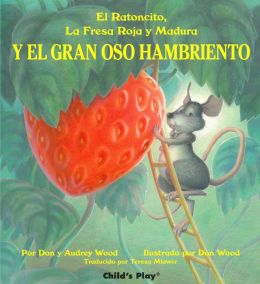


El Ratoncito, La Fresa Roja Y Madura y El Gran Oso Hambriento-A little mouse tries to save a strawberry from a hungry bear.

Here is a list of other resources and activities I will be doing with my students...


One of the activities we will be doing is playing a "Collect It" game. I made the above labels with the different parts of a plant to display during the game. I then made little cards with different types of fruits and veggies on them. {You can find the pictures here.} Here is how you play...Make sure you have made enough cards so that each student that is playing can collect each part of the plant. For example: Radishes are roots, peas are seeds, etc. The goal is for each student to end up with six items each one representing the six parts of a plant. You can make a few extra cards if you like. You start playing by laying all the cards face down. Each student takes a turn picking up a card. If they need that card they lay it face up in front of them. If it is a duplicate part then they return the card and lose their turn. The first to collect the six parts wins.  NOTE: Some of the veggies can be tricky. For example, did you know that potatoes are actually part of the stem? And onions are actually leaves not roots even though we call them root vegetables? So make sure you know what is what before playing with the kids.

Pumpkin Life Cycle War Card Game-Anytime I teach a life cycle {like the life cycle of a plant} I teach/review the ordinal numbers. This game is great for this! I know it is in English, but I will use it to review Spanish vocabulary. When kids lay down their cards they will have to say the stage in Spanish or the ordinal number in Spanish {depending on how we decide to play that round.}

Fold and Learn Plant Parts {in Spanish or English}

Plant Unit in Spanish

Roll and Build a Flower Game-To review the parts of a flower

Finally, here is a printable that I give to my parents on what their children are learning. It is the basic vocabulary for the unit.


Also, here is a file for the parts of a plant labels for the Collect It game...


Enjoy exploring plants with your students!

Friday, April 10, 2015

Spanish Books for Spring {for Kids}

{Affiliate links used. Thanks for supporting this blog.}

I love spring and the promise of warmer weather and growing green things out in the garden! When you live in Alaska spring holds a special place in your heart! So here is a collection of spring books to read to your kids/students in Spanish.  You can do all kinds of exploring with these books. Gardens, butterflies, and rain await you!


La Oruga Muy Hambrienta- A classic great for teaching the days of the week and food vocabulary.

El pollito que no quería salir del huevo- A cute book about a chick that doesn't want to hatch from his egg.

La Semilla de Zanahoria -Another simple classic about waiting for a carrot to pop up from the ground.

Como crece una semilla- A "Let's Read and Find Out" science book about how seeds grow.

Adivina Cuanto Te Quiero-A baby bunny wants to know how much he is loved.

Froggy al Bate- My Spanish students love Froggy books! Here is his adventure at bat.

¡Montones de mariquitas!- A counting book that teaches kids how to count by fives. You can use the story to practice counting by ones and fives.

Atrapados-We love Oliver Jeffers' books in Spanish around here! This is a comical story about a boy that gets his kite caught in a tree. What happens next is unbelievable!

Habia una vez una gota de lluvia and Habia una vez una semilla are two books I am going to be ordering soon to use during the spring months.

To see more spring activities for Spanish students check out these posts:

Insect unit
Ladybug unit
La Oruga Muy Hambrienta activities

Here is a plant unit that goes great with spring and/or summer!

Looking for other seasonal books?

Winter Books
Summer Books
Fall Books

Wednesday, April 1, 2015

Solar System Unit in Spanish {Resources, Ideas, and Free Printable}

{Affiliate links used. Thanks for supporting this blog.}

This fall I will be teaching my younger students a solar system unit in Spanish. I LOVE doing these units as it gives them extra vocabulary that we wouldn't fit in otherwise. It also lets us explore a theme in depth. I am still in the process of putting the finishing touches on this unit, but here are the basics: vocabulary, resources, and ideas. 

Vocabulary and Grammatical Concepts:

Here is a free printable to use with all the vocabulary for this unit:


Teaching the Solar System is a great way to incorporate the ordinal numbers {first, second, third, etc.} when you teach/review the order of the planets. You can also teach vocabulary related to size {small, big} and distance {close to, far from, in between}. During this unit I plan to also review the verb "estar" because it relates to location.

Here are several children's books that we will be reading:


De vuelta a casa -A cute story of a little boy and a martian that he meets on the moon. Written and illustrated by Oliver Jeffers.

Cómo atrapar una estrella -Another adorable book by Oliver Jeffers on how to catch a star.

El Universo (Mi Pequeno Enciclopedia)-A simple informational book on the universe. I LOVE this series of books!

Llevé a la Luna A Pasear-A story about taking the moon for a walk.


Other resources:

Giant Magnetic Solar System- This set can be used throughout the unit for various activities. One idea? Use it to teach the ordinal numbers in Spanish while putting the planets in order.

Show relative distance between the planets- This is great to reinforce words like cerca, lejos, entre.

Galaxy Game

Simple Exercise to label the planets in Spanish

Idiomatic Expressions to teach with the word "LUNA"

El Sistem Solar Unit-on Teachers pay Teachers

Yo Tengo...Quien Tiene Solar System Game

Planets Lapbook in Spanish and English

El Sistema Solar posters

Enjoy teaching about the Solar System! If you have any other ideas I would love to hear them!