Showing posts with label Culture. Show all posts

Monday, March 11, 2019

Spanish Camp - Discoverers

Join me in June for four days to learn some Spanish through cultural crafts, games, stories, and fun! This camp is for kids who have had a year or less exposure to the language and who have NOT done a previous camp or ¡Explora Español! class with me. Each day will be spent learning some basics of Spanish through games and stories and focusing on one of the Spanish-speaking countries through a craft.

Below are three of the four crafts we will be doing...


{La Boca Neighborhood, Buenos Aires, Argentina}

{Molas from Panama}

{Personal Piñatas}

The Details...

K-3rd Graders     June 3-6 (Monday-Thursday)  2-4pm
4th-8th Graders   June 10-13  (Monday-Thursday)  2-4pm

The cost is $80 (non-refundable) and must be paid in advance to secure your child(ren)'s spot.

Contact Debbie through her Facebook page at Debbie's Spanish Learning for more information and sign-up instructions.

______________________________________________________________________________

Debbie has been teaching Spanish for over 25 years. She has a passion for teaching kids the language and sharing with them the cultures and places where it is spoken. It is her hope through teaching the language to instill a love in her students for exploring the world around them.

Spanish Camp - Explorers


Join me in June for four days to further extend your child(ren)'s knowledge of  Spanish through cultural crafts, games, stories, and fun! This camp is for kids who have some exposure to the language or who have done a previous camp or ¡Explora Español! class with me. This year we will explore the countries of Costa Rica, Peru, and Guatemala plus explore the geography and flags of all the Spanish-speaking countries.

Below are two of the four crafts we will be doing...


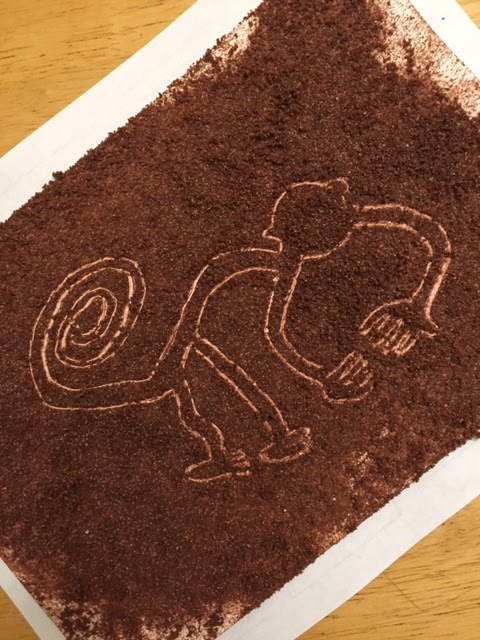
{The Nazca Lines of Peru}

{The Quetzal bird of Guatemala}


The Details...

K-3rd Graders    June 24-27 (Monday-Thursday)  2-4pm
4th-8th Graders  June 17-20 (Monday-Thursday)  2-4pm

The cost is $80 (non-refundable) and must be paid in advance to secure your child(ren)'s spot.


Contact Debbie through her Facebook page at Debbie's Spanish Learning for more information and sign-up instructions.


______________________________________________________________________________

Debbie has been teaching Spanish for over 25 years. She has a passion for teaching kids the language and sharing with them the cultures and places where it is spoken. It is her hope through teaching the language to instill a love in her students for exploring the world around them.
Wednesday, October 3, 2018

Culture, Crafts, and Language Learning


{Affiliate Links Used}

It's been SEVERAL months since I posted. Life has been much busier than I ever imagined. This past summer I did Spanish camps and loved teaching more kids the language and introducing them to the cultures where Spanish is spoken. At some point, I hope to do some posts on those adventures and share my teaching ideas.

This fall I decided to offer a new type of class... ¡Explora Español!, a six-week class that gives kids a taste of Spanish through culture and crafts. I have really enjoyed this class more than I would have imagined. With each week, I teach a bit of Spanish and then connect it to a cultural component which leads into a craft. Let's take a look at one of the classes I did to see how it all works together...

One week I taught the kids body parts. Since I tend to use Mr. Potato Head in my regular classes when teaching body parts I figured I would do the same in my exploratory class also. Then it hit me. Potatoes are originally from South America. There was a tie-in. So after teaching body parts, we talked about the potato and where it came from. I mentioned the many varieties out there...many more than my students had ever seen. We then reviewed the body parts using Mr. Potato Head. I then gave each student a potato and we got to work. This craft was done mostly in Spanish. We started with the "ojos" and did the complete face. The sombrero and zapatos were next. We finished by placing cut pipe cleaners on the sides for brazos. 


The paper parts I cut out ahead of time to save time. {Also, it is a good idea to wash and dry the potatoes ahead of time so the glue will stick.} You can find several templates online like here. Make sure to resize them so they will fit on the potatoes you are using.  We would review the name of the body part in Spanish and then students would put glue {We used this one, and it works well.} on the piece. Because the potatoes are round it helped to hold the pieces in place for a few seconds. I had the students count to twenty in Spanish before taking their fingers off one of the pieces. With the shoes, it was helpful to use these glue dots instead of the liquid glue. Aren't they so cute?

Here are some other ideas for connecting language, culture, and crafts into your lessons {You can click on the link for each craft to get ideas}:

Names of animals-- Talk about the importance of llamas in South America-- Paint a llama 
Clothing vocabulary-- Talk about Guatemala and worry dolls-- Make a worry doll


House Vocabulary-- Talk about the neighborhood of La Boca, Buenos Aires, Argentina-- Make "La Boca Houses"
Weather Vocabulary-- Talk about the Atacama Desert in Chile-- Make a Chilean rainstick
Fruit and Veggie vocabulary-- Talk about Chile and Peru and arpilleras-- Make an arpillera
Telling time-- Talk about the artist Salvador Dalí-- Make melting clocks

Do you have any other connections for teaching language, culture and then adding a craft? I would love to hear them!!

Tuesday, March 20, 2018

Easter Island {Cultural Craft for Spanish Students}


{Affiliate Links Used}

I am gearing up for another summer of Spanish camps and so looking forward to it. My camps are composed of language practice, cultural crafts, games, geography, and stories. It is a great introduction for kids in the language. You can find all my posts about summer camp if you click here.

Last year we made personal piñatas, molas, Chilean rainsticks, and a few other cultural crafts. For the kids that will be returning this year, I needed to have some new material to teach them and some new crafts. One of the days we will focus on body parts and the country of Chile so I thought it would be a great opportunity to make Moai, the famous Easter Island statues. 

I wanted an easy, quick way for students to make the statues without us taking too much time. I happened to find this ice cube mold and thought it would be perfect! (You can find it here.) Next I wanted a no-mess, easy clean-up clay that would air dry. This air dry clay is perfect, and I bought several packages in gray to make the heads with. To add to the educational value of the craft we are going to model the actual island (which is triangular) and  add a little bit of the ocean around it. I am thinking that I will make the clay for the island and the water to save on money. You can find a recipe here.


Along with making the islands, we will be spending sometime learning/reviewing body parts. I have made some extra statues in order to play a game that I saw online a few months back. Here's how it is done: You create two lines of students and have them face each other so that each kid has a partner. They need to be seated on the floor/ground. Place between each set of kids a Moai statue. Then begin to call out body parts in Spanish. Whatever body part is called the students have to place their hands on that part of themselves. So for example, if I say "cabeza" they will put their hands on their head. Call out several body parts. Then at some point say "Vayan" (or even "estatua") which means the pairs have to grab the little statue that is between them. Whoever grabs it first between the two kids wins and gets to stay in the game. Have the remaining that are still playing pair up with a new partner and do another round. Continue until you have only one student remaining. You can modify this game to make it a little less competitive for younger kids who sometimes struggle with winning and losing. Don't have anyone exit the game. Let everyone continue playing no matter who got the statue first.


I am also planning on doing a scavenger hunt with the statues by hiding them in an outdoor area and having the students search for them. I will probably do directions in the target language for older kids.

Here are some other resources to use in conjunction with this craft...

For my summer camps I limit the number of students so that kids get to practice in the language. So I will probably be buying several sets of these excavation kits for kids to work on in pairs. They get to dig up some Moai! (You can find them here.)

Also, have you been to Mundo de Pepita? It is an awesome blog with tons of resources and ideas for teaching Spanish to children. She also has a Teachers pay Teachers store which you can find HERE. She recently came out with a bulletin board set for the country of Chile! I will be using it during my camps as I like to have visual representations of the different countries we study. The set includes Moai, guanacos, the Chilean flag, some of the flora of the country, and a few other items.


Finally, here is a game to use, especially if you are breaking your students into groups to do center work. They can call out the numbers in Spanish as they play. The game is called Sneaky Statues and can be ordered HERE.

If you have any other ideas to go along with the Moai I would love to hear them!!

Tuesday, June 20, 2017

Spanish Camp for Kids {Day 2}

{Affiliate Links Used.}

This summer I am hosting some summer mini-camps to teach kids Spanish. Today we will take a look at what I plan to do for day two. {Here is day one if you missed it.} For the second day of camp, we will focus on teaching numbers (1-10) and weather vocabulary. Here's a look at our activities:

We will start out by me teaching the vocabulary. Normally, I find that many young kids already know the numbers 1-10 so I always modify my lesson to fit the ability levels in the group. After we work with the vocabulary we will do a round of "Zapatito Blanco, Zapatito Azul". {Here's a video on how it works.} In the past, I have used just the first two lines of the rhyme and had the students call out their actual age, or you can use the whole rhyme as is.

Zapatito blanco, zapatito azul. 
Dime, ¿cuántos años tienes tú? 
¡Cinco! 1, 2, 3, 4, 5*
Y sales tú con la letra doble-u.


On to a more active game...I have filled several little baggies with random items. Some bags have two items, some five, some ten. You get the idea. The baggies will be placed around the lawn. I will call out a number in Spanish, and my students will run to find a baggie with that number of items in it. It's helpful to have a few bags that have the same number of items. If you do that, then a few students will get a bag for each number. Students aren't allowed to open the bags...they simply need to count the items to see if the bag is what they want. The student with the most bags at the end wins.

We will play "Cerdos" with the numbers and colors today. You can read all about this game HERE.


Our craft for the day will be rainsticks since we focused on weather earlier. Here are the complete instructions on how to make them. Before we dive in, I will show them where Chile is and talk about the desert there.

We will also do Weather Bingo and play this number and color game, if time allows.

And finally, here is a list of books we will be reading...


Un Dia de Lluvia
Los Animales No Se Visten- This book is incredibly funny!
Oso Bajo el Sol
Un Alce, Veinte Ratones- This will be a great review of numbers and will extend our counting a bit. There are also tons of animals in the book which will lead into tomorrow's theme!

To see all the posts on my Spanish Camp plans, click here, to read them as they become available. There will be five days total.


Sunday, June 18, 2017

Spanish Camp for Kids {Day 1}


{Affiliate Links Used}

For the first time ever, I am going to be doing summer camps for Spanish! I am really excited about it as I will have time to do some of the extras (like crafts) that I can never seem to get to. So here's a look at what I have plan for Day One (two to three hours worth of activities)...

Today we will be doing introductions and then really focusing on learning the vocabulary for colors and some clothes. I tend to teach vocabulary to young kids with flashcards and then ask them questions/give commands about the flashcards in the target language like "Where is yellow?" or "Touch the pink card." After we have worked with the words a bit we are going to do the following activities:


Discuss where Guatemala is and the idea behind Worry Dolls. We will create our own worry dolls. I bought embroidery floss and these round doll pins for us to use. You can find the instructions for making these dolls here. This is a great time to reinforce the vocabulary you taught your students by talking to them about the colors and clothes their dolls are wearing.

We will do this color wheel activity and speak in the target language to talk about how the primary colors make the secondary colors (Rojo y amarillo hacen anaranjado.).

We will play Camino de Colores from Spanish Playground...a quick and active game.


I have purchased this set of plastic cups to play different games with during the week. Today we are going to play the color cup game. I will divide my students into two teams. One team will be azul and the verde. On the lawn there will be stacks of cups (two cups each). Some of the stacks have the blue cup on top; others have the green one on top. Each team runs around for one minute trying to change the stacks so that their color of cup is on top. Time the game. At the end of one minute, the team with the most stacks for their color wins. Try to use the target language for instructions as much as possible. 

For my older group, we will do battleship with colors and clothes at the end of the day.

Interspersed throughout the few hours today we will read stories. Here is our list for Day One:


Colores (Very cool book with some clear pages in it that change what is happening on the paper pages. See this English example.)

You can go to this link as I add more days and ideas for camp! Day two will be posted soon!


Saturday, June 17, 2017

Spanish Camp Ideas

{Affiliate Links Used.}

This summer I am branching out and doing mini-camps to teach kids Spanish. The camps will be for elementary-age kids relatively new to the language and last one week. Mine will be two hours a day (although my ideas could totally be stretched to three hours a day).  Over the next week or so I will share with you my ideas...what I will teach each day, the games we will play, and the cultural crafts we will do. I have to admit that I have relied heavily on Pinterest for great ideas for games and crafts. The bulk of the work has been setting up the structure of what I am going to teach. So join me over the next week or so as I give you details of what you can do if you decide to teach a Spanish camp yourself. We'll talk supplies, activities, games, culture, and crafts. {Like these great bilingual cookies to hand out during the week.}

So join me! And I would love to hear your ideas, too! You can eventually find all the posts HERE.

Sunday, November 1, 2015

Christmas Teaching Resources in Spanish {Free Printable}

{Affiliate links used.}

Early November is the perfect time to start thinking of what you will be teaching your students around the Christmas season. Since I only teach my Spanish students the first two weeks of December I need to begin a littler earlier. There have been many winters where I haven't spent anytime on Christmas vocabulary and the like. This year I decided to get a jumpstart on it...

Here are some simple ideas you can incorporate into your teaching during the holidays...


I recently came across Christmas Spot It! Game. So exciting! My students LOVE Spot it! games. I find them to be the best game out there that is pre-made and helps build my students vocabulary quickly. Take a look at this post on how to play it when you are teaching students the new vocabulary for the game. It has to be modified slightly until they master the words. Since one of the biggest challenges of this game is to have a list in Spanish of all the items, I have provided one here for you. Please download it and use it!

Spot It! Christmas Vocabulary

Here are a few children's books to read during the season:

La Mejor Navidad De Froggy- One of the favorite series for my students are Froggy books. They love the humor in them. This one (like most of the Froggy books) is out-of-print, but is cheap on the used market at Amazon.

Un Día una Señora se Tragó una Campana - A cute, shorter story for the younger set similar to "There Once Was an Old Lady that Swallowed a Fly".

Estela reina de la nieve - Not specifically a Christmas book, but because it deals with snow it would be a great book for December. Estela has such cute and funny conversations with her little brother, Samuel!

Un Dia de Nieve -A classic about playing in the snow.

Celebra La Navidad Y El Dia De Los Reyes Magos- I haven't gotten this book yet, but I love Alma Flor Ada's books. This story is set during the Day of the Three Kings.


Here are a few more Christmas resources:

Christmas I Spy- I would use this to practice vocabulary and counting with my younger students.

Winter I Spy


Here are printable cards to use during December. If you print out two sets you can play Go Fish and Memory with them.

Spanish Playground has a post with tons of Christmas-related printables. Check it out!

Any other ideas for teaching Spanish during the Christmas season? I would love to hear from you!

Saturday, February 21, 2015

Veinte Mundos {Helpful Website and Free Printable}


This past year I have been using Veinte Mundos with one of my advanced students to improve his Spanish listening and writing skills. This online magazine is perfect for students to increase their skills and learn more about the cultures that speak Spanish.

Looking through the library of articles you can see that there are all sorts of topics to choose from. Here are some that I have used in the past that are good...

Dulce de Leche-The delicious caramel of Latin America
Quitapenas-Worry dolls
El Guarani en Paraguay-The native tongue of Paraguay
Silbo Gomero-A language of the Canary Islands that consists of whistles

Each article (either categorized as intermediate or advanced) can be listened to as your students read it on the screen. Within the article students can highlight a word and click it to see a definition. Besides the article there are tabs like the "lenguaje" tab that goes over grammar points, vocabulary, and has comprehension questions. Many articles have videos (under the "multimedia" and "viaja" tabs) to watch related to the article.

I created a worksheet to be used with any of the articles on the site. It is a place for students to record new vocabulary, color in a map of the country or countries in the article, and then write a summary of what they learned.  


This site is such an awesome way to bring Hispanic culture to you high school students in the target language! Not to be missed!

Friday, January 30, 2015

María Tenía una Llamita


This post is part of a series, 31 Days of Spanish Books for Kids. Please click HERE for the complete list of posts. {Each of these posts contain affiliate links. Thanks for supporting this blog!}


We are all familiar in the United States with the song "Mary had a Little Lamb". But how about María Tenía Una Llamita? Set in Peru, the text follows the original rhyme (It is printed in both English and Spanish) except it is no longer a lamb and María is dressed in the traditional clothing of the area.
While this book is simple in its language, I find it invaluable for introducing to the youngest of children the concept of different cultures. Even the fact that there is a llama instead of a lamb throws some kids into confusion as there are many young children that have no experience with what a llama is. So we spend some time talking about this "new" animal.  I also point out other visible cultural differences like the clothing of the teacher and students, the open-air market, and the traditional musical instruments. This book also provides an opportunity to take a look at geography.  There is a simple map in the book that labels a few places in Peru. There is also a page with several clocks that show the passage of time in the story, and you could introduce the "top of the hour" and how to say it in Spanish.

This is one of my favorite books for introducing younger kids to South America and is not to be missed!

Saturday, January 17, 2015

De la A a la Z (Country Books in Spanish)


This post is part of a series, 31 Days of Spanish Books for Kids. Please click HERE for the complete list of posts. {Each of these posts contain affiliate links. Thanks for supporting this blog!}

Today's post in more on a series of books than just one...


Teaching about the different cultures and countries of Latin America can be tricky. While most of them speak Spanish that doesn't mean they have the same culture. What is normal and acceptable in Columbia maybe totally different in Bolivia. What is well known in Chile may never have been heard of in Mexico. Like my friend from Argentina who one day visited Mexico and ordered a tortilla and was shocked to find out that it was a type of bread.  To her a tortilla is a potato omelette.

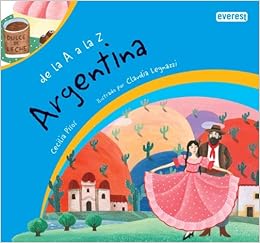
I recently came across a series of books for different Spanish-speaking countries. The series is called "De la A a la Z" (From A to Z). I decided to order the one about Argentina since I've lived there and am most familiar with their culture. I have to say I was really impressed with the book! There was a wealth of information in there to teach Argentine culture.


Each page takes a letter of the alphabet and connects it to an item in that culture. For example, the A is for Aconcagua in Argentina. The E is for empanada.  The M is for mate. Each page has a poem or rhyme in Spanish about the item and more information (also in Spanish) down at the bottom.  I was impressed to notice that even the correct Argentine vocabulary is used for simple items. For example, they use the word pollera instead of falda for skirt.  Most Argentines would use the first word instead of the second.
Here is a list of books in the series:

De La A a la Z Puerto Rico 
De la A a la Z Peru
Argentina (De La a a La Z) 
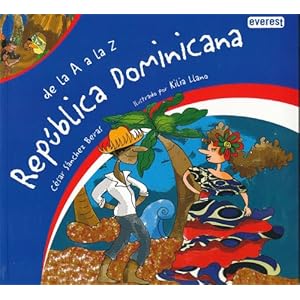
De la A a la Z República Dominicana
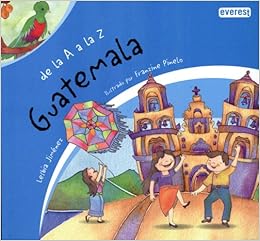
De la A a la Z Guatemala 
De la A la Z Por Mexico
de La A a la Z Cuba
De la A a la Z Chile
De la A a la Z Colombia 


Because these books are written totally in Spanish, they are better suited to older kids and those that are more advanced in the language. These would also be excellent books for native speakers to learn more about the countries they are less familiar with. They would be a great addition to a Spanish classroom!